

A lot of people have mentioned confusion over the text of the Harley, particularly as they don’y know Japanese. I already offered my breakdown and explanation of it last week, but people were requesting an even deeper dive into the language and nuances of every single word of the Harley, and so I decided to do a complete breakdown that analyzes and dissects every single world in the Harley in an objective grammatical manner, so that you can properly understand it and form your own theories! Enjoy!
As a note: I will stick to being as objective and dictionary-oriented with the text as possible (while what is written in brackets is instead my own personal observations, while still trying to avoid being too speculative)

THE FIRST WORLD
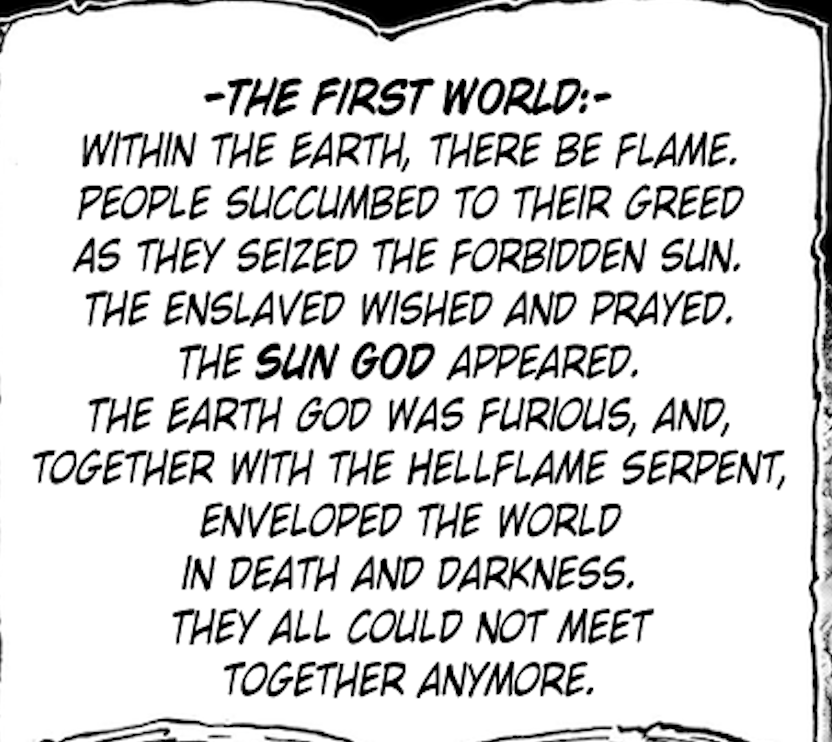
「第一世界」ー = The First World. Same terminology that is used to refer to the first of Elbaph’s worlds, the Underworld (suggesting Elbaph’s worlds were named after the Harley)
地に炎あり = Within the Earth, there be flame.
地 = Earth. An archaic term that was used in ancient times to refer to planet Earth, or specifically the plane of the land, particularly in texts such as that of the Bible and other archaic texts akin to the Harley (could suggest this old world really was originally the Earth or similar to it given the choice to use this terminology, but it could just be a poetic term for the land as a whole here)
に = Within, in, on, upon. Particle pinpointing location that can either mean inside of (as in, the flame was taken from inside the Earth) or simply upon (the flame was discovered on the Earth). Within is ambiguous enough that it encapsulates most meanings
炎 = Flame. Not to be mistaken with “fire”, which uses a different kanji. Shares the same kanji with what was used to describe the Mother Flame (suggesting this is in fact referring to the Mother Flame)
あり = There be. Old poetic form of the verb to be that affirms the existence of something (hence why translated here as the similarly poetic “there be”)
人は欲望を負け = People succumbed to their greed.
人は = People. Sentence subject. Generic descriptor for individuals that doesn’t specify race. Some translations used “man”, though this refers in the context of “mankind”, not to be confused with “humans”, 人間, or a single “man”, 男
欲望 = Greed, desire. A more archaic form of 欲, “yoku”, which means “greed” or “desire” (York is named after this term, and this perhaps relates to the concept Lilith mentioned in Ch.1061 that all creatures succumb to their natural greed, as York eventually does too)
負け = To lose, to succumb to. In this context, losing to greed/desire means succumbing to one’s own greed
禁断の太陽に触れた = as they seized the forbidden sun.
禁断 = Forbidden, prohibited. Attributed to “Sun”
太陽 = Sun. Same term used to refer to the “Sun God” and the Sun as a whole in the series (which may tie into the larger symbolism between the forbidden sun, the Mother Flame, and the Sun God. In this sentence, given the previously established context, it would seem the forbidden sun is referring to the Mother Flame)
触れた = Touched, seized. Past tense, subject is the previous sentence’s “people”. Means to touch something, but depending on context can also mean as seizing it more aggressively, so “seized” may be more correct here
麗人は願い = The enslaved wished and prayed.
麗人は = The enslaved. Sentence subject. An archaic form of “slave”, literally meaning “enslaved person”, though it was also used for those under servitude or being forced to work in slave-like conditions (thus, I used “enslaved” here to be safer. Could even refer to workers or something like that)
願い = Wish, prayer. Can mean the fairly synonymous act of wishing or praying, so both have been included here just to be safe. Once again written in a fairly poetic archaic form
〝太陽の神〟は現れた = The Sun God appeared.
〝太陽の神〟は = The Sun God. Sentence subject. Written in the same way as Nika has always been referred to. In this case Sun God uses quotation marks in Japanese, but in JP quotation marks are often used to emphasize in the same way bolding does in English, so please keep in mind it is not the same as using quotations in English. In the past, Sun God also carried quotations/bolding, but the other Gods here do not. Also written the same as the Sun God in Noland’s flashback Ch.287, with the other three gods mentioned here also mostly matching
現れた = Appeared. Past form
地の神は怒り = The Earth God was furious.
地の神は = The Earth God. Sentence subject. Uses the same “Earth” used in the first line. Is written similarly to the God mentioned in the Noland Flashback Ch.287, 大地の神, or “God of the Great Earth”, but that used a fairly synonymous word written slightly different (could just be a regional name for this deity though, likely being one and the same)
怒り = Raged, was furious. Refers to anger, rage, but written in and old poetic form, thus indicating an action of becoming enraged and angry
業炎の蛇と共に = and, together with the Hellflame Serpent,
業炎の蛇 = Hellflame Serpent. The first word is a modification of 業火, or hellfire, which refers to the fires of hell that burn those who have sinned. However, the second kanji has been swapped with that of 炎, flame, making the word the more unique Hellflame instead of Hellfire (this is likely to match the use of “Mother Flame” before, suggesting a connection with this serpent and the Mother Flame). The second word is simply serpent, snake (it’s worth noting that Dorry referred to the Red Line as a “serpent” in Chapter 129, strongly suggesting this could be referring to the Red Line, harkening to the norse myth of the Jörmungandr, the snake that envelops the world)
と共に = Together with, alongside. This indicates that the Earth God performed this action together with the Hellflame Serpent, though to which extent this relationship was like, or if the serpent was controlled by it in some form, is unclear
世界を死と闇で包んだ = enveloped the world in death and darkness.
世界を = The world. In this case, the world is the object suffering the action, whereas the subject would be the Earth God together with the Hellflame Serpent from previous lines
死と闇で = In death and darkness. First word means death, while the second means darkness (worth noting that it’s the same word as Blackbeard’s fruit, Yami Yami no Mi, but hard to say if it’s just because the word simply means dark or if there’s a deeper connection)
包んだ = Enveloped. Past indicative. Could also be translated as “shrouded” or “wrapped”, but it’s worth noting it literally means covering or enveloping, perhaps in a very literal sense (could perhaps refer to the Red Line enveloping the whole world)
彼らはもう会えないのだ = They all could not meet together anymore.
彼らは = Third person male plural pronoun (they in English). Sentence subject. English treats third person plural as gender neutral “they”, so this slight nuance gets lost in translation, even though it may not matter much as any large group of people with at least one male become a default male plural (similar to ils/elles in French or ellos/ellas in Spanish, etc.). This seems to refer to a larger group of people rather than just two individuals, as in that case something like 二人は, the two of them, would have been used, which is much more common and logical in Japanese when referring to two people. It’s hard to say for sure given the poetic language, but it would seem very odd if this was just two people (hence why “they all” is used here). Japanese often specifies subject through previous context, so you could infer that the subject is all those previously mentioned (as such, “they” here could be referring to all the people of the world being separated). As a note, in JP pronouns refer to living creatures, but in a poem you could potentially consider them as a personification of inanimate objects too (though even if you considered the world being separated, could refer the people of said world too)
もう = Anymore. Could also mean “again”, but given the possibility that they may not have ever originally met (although frankly quite doubtful given the context) “anymore” is probably safer of a translation
会えないのだ = Could not meet again, could not be together again. Negative past indicative. Indicates that “they” could not meet anymore following these events, though more than simply meeting, the verb more poetically means to meet each other in the sense of frequenting each other, being together, and thus forming long-standing friendships. Interestingly, Bink’s Sake also speaks of “not being able to meet again” with pretty much the same language, referring to the people who were separated
THE SECOND WORLD
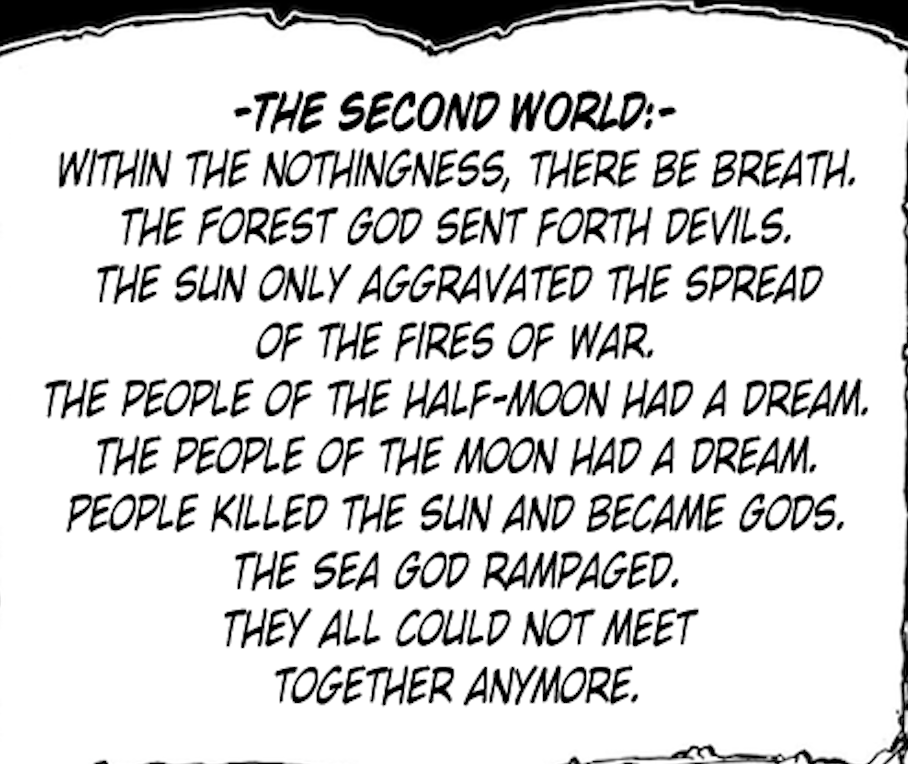
「第二世界」ー = The Second World. Same terminology that is used to refer to the second of Elbaph’s worlds, the Sunworld
虚無に息吹あり = Within the nothingness, there be breath.
虚無 = Nothingness. Could also be translated with the synonymous “void”, though it’s worth noting this is a separate word from “Void Century”, which would more accurately translate to “Blank Century” (blank as in the pages of a book rendered blank after the erasure of information). As such it’s important to distinguish these two are separate, but they are all fundamentally similar synonyms in the end
に = Within, in, on, upon. Same as in the first chapter. Sentence structure for the first line is identical across all three chapters
息吹 = Breath. In a poetic context, this can mean a multitude of things (it’s unclear what this signifies specifically, but personally it could refer to humanity and life rearising)
あり = There is. Old poetic form of the verb to be that affirms the existence of something, like how it is used in the first chapter
森の神は魔を遣わせた = The Forest God sent forth devils.
森の神は = The Forest God. Sentence subject. Same exact writing as the Forest God mentioned in Noland’s flashback Ch.287
魔を = Devil/Devils. Sentence object. Unclear whether it’s singular or plural as Japanese doesn’t distinguish (but likely referring to either the creation of devil fruits or the original devil/devils). Uses a more archaic word that refers to any kind of devil or devilish creature, though sharing the same etymology with that of devil fruits, 悪魔の実. Some mistranslated it as “magic” due to sharing a similar etymology, as magic was seen as devilish witchcraft, but “devils” is correct here
遣わせた = Sent forth. This is a very tricky word to translate as this kanji can be used for two different verbs. On one hand, it would generally be the verb “to unleash”, or “to bestow”, but in the form it is written here though, this kanji would be the causative past indicative form of the verb “to use”. Though this can encompass the meanings of using someone (as in controlling them, particularly with a creature), which might be why Viz went with “tamed” as a translation. I would argue though that “sent forth” is probably more accurate as it makes more sense that this Forest God is “using” the devils in the sense of unleashing them upon the world. This also helps cover the possibility of the other meaning of the word, to unleash, in the safest way possible
太陽は戦火を広げるばかりだ = The Sun only aggravated the spread of the fires of war.
太陽は = The Sun. Sentence subject (in this context once again could likely refer to the Mother Flame aggravating war as it was rediscovered)
戦火を = Fires of war. Sentence object. In this case it uses “fires” instead of “flames”, though likely to distinguish the subject (which would be the Mother Flame) and object here
広げる = To spread, extend. Written in a neutral form here as it is combined with the following word
ばかりだ = To aggravate. Refers to making a situation worse, which in this case it was aggravating the spread (likely referring to the use of the Mother Flame to cause more war, such as Imu seemingly using the Mother Flame to shoot attacks with the ancient weapon Uranus)
半月の人は夢を見た = The people of the half-Moon had a dream.
半月の人は = The people of the half-Moon. Sentence subject. Once again here 人 is simply “people”, whereas “半月” is literally just half-Moon, referring to the Moon in a half-phase (many have pointed out how the shape of the half-Moon may refer to the shape of the “D”)
夢を見た = Saw a dream. 夢を, dream, is the sentence object, and 見た is past form of “to see”. To see a dream in Japanese essentially means more poetically “to have a dream”
月の人は夢を見た = The people of the Moon had a dream.
月の人は = The people of the Moon. Sentence subject. Same thing as previous sentence, except instead of half-Moon it’s simply “Moon” here (lunaria is derived from Latin, referring to “Moon people”, and thus it’s likely this sentence refers to them, as they were seemingly major players of the Void Century alongside the D. clan)
夢を見た = Saw a dream. Same as last sentence (the fact that both had a dream said back to back seems to suggest they shared the same dream, but hard to say for sure)
人は太陽を殺し神となり = People killed the Sun and became Gods.
人は = People. Sentence subject. Same generic descriptor
太陽を = The Sun. Sentence object (in this context, it could either refer to the technology of the Mother Flame being lost, or more simply the Sun God, in this era being Joyboy, being killed)
殺し = Killed. Written in archaic form
神となり = Became Gods. Given the subject being “people”, this “Gods” is likely plural. なり is the archaic form of “to become” (likely refers to the kings who became the Celestial Dragons)
海の神は荒ぶった = The Sea God rampaged.
海の神は = The Sea God. Sentence subject. In Noland’s flashback Ch.297, this god is referred to as the “Rain God”, 雨の神(though again could be a regional name for it. Rains are often associated with flood)
荒ぶった = Rampaged. Past form. Essentially means to rampage, savagely destroy, or as Viz translated it “stormed”. Some mistranslated it as “grew furious” despite being different words than what was used with the Earth God in the first chapter (this Sea God is most likely Imu, and it’s likely referring to the rampage that was the attacks which led to the flooding of the world)
彼らはもう会えないのだ = They all could not meet together anymore.
Written in the same identical way as the first chapter. Pleas refer to the explanation there.
THE THIRD WORLD
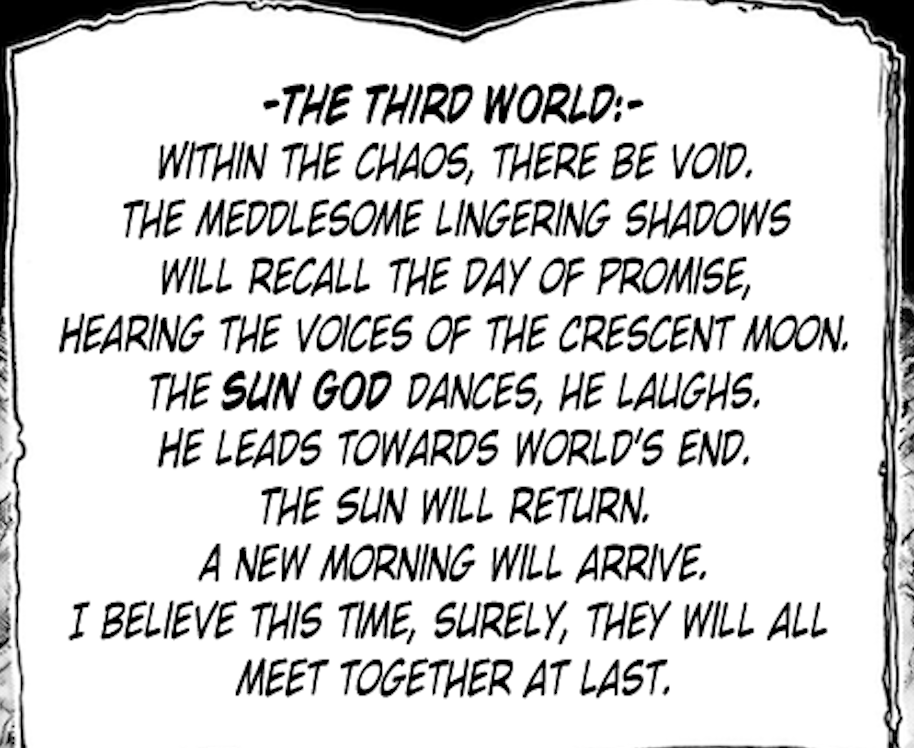
「第三世界」ー = The Third World. Same terminology that is used to refer to the third of Elbaph’s worlds, the Celestialworld (Celestialworld, also Heavenworld or Skyworld, uses the same kanji as in Celestial Dragons)
混沌に空白あり = Within the chaos, there be void.
混沌 = Chaos, confusion, disorder (likely referring to the chaos and confusion left after the century)
に = Within, in, on, upon. Same as past two chapters. Sentence structure for the first line is identical across all three chapters
空白 = Void. Same word used in “Void Century”, which more literally means “blank” (as in the pages of history having been left blank, literally combining the kanji of void/empty with white)
あり = Old poetic form of the verb to be that affirms the existence of something, like used previously
不都合な残影は約束の日を思い出し = The meddlesome lingering shadows will recall the Day of Promise.
不都合な = Inconvenient, meddlesome. Adjective for “lingering shadows”. Refers to something that is meddlesome or inconvenient, annoying (reminds of how Imu was annoyed by those seeking the poneglyphs, though Imu used different words)
残影 = Lingering shadows. Sentence subject. Generally refers to the remnants of some people, though lingering shadows is the literal translation. An old expression that refers to those who remain behind of a group of people, staying behind like a lingering shadow or afterimage (similarly, Toki used the word “shadows” to refer to the Scabbards inheriting Oden’s will, so it likely speaks to the concept of inherited will)
約束の日を = Day of Promise. Sentence object (written in the same way that other characters have referred to the “Day of Promise”, such as the fish-men speaking of the day the Ark Noa will fulfill its true purpose)
思い出し = Recall, remember. Archaic form, so you could write it as either present or future tense
片われ月の声を聞く = Hearing the voices of the crescent Moon.
片われ月 = Waning/crescent Moon. Attributed to “voices”. 片われ月 literally means “half-broken Moon”, but particularly is an archaic/poetic term to refer to to a waning or crescent Moon, where it looks as if it were broken by having an indentation (this is most likely referring to the people of the Kouzuki clan, as the crescent Moon was their symbol, such as on Oden’s vest). Viz translated this as “half-Moon”, but this is a different term than the “half-Moon” used earlier. The Half-Moon, the Moon, and the Crescent Moon are all different terms here, likely referring to different people (likely the D. clan, Lunaria, and Kouzuki clan). Some have noted this term had been used in a previous chapter title for Ch.292, but that was simply referring to the phase of the Moon as quoted in an old Japanese poem and is thus most likely unrelated (a synonymous term is also used for Ch.28 for similar reasons, just referring to the Moon)
声を = Voices. Sentence object. Unclear if it’s singular or plural but that shouldn’t matter much (“hearing the voices of the cresecent Moon” likely refers to reading the poneglyphs left behind the Kouzuki clan. Particularly, Roger referred to being able to hear the “voices” of the poneglyphs, such as in Ch.966)
聞く = To hear. Present/future tense (Japanese doesn’t distinguish. Being written from the past, this is most likely future, though you could also write it here as “hearing”)
〝太陽の神〟は踊り、笑い = The Sun God dances, he laughs.
〝太陽の神〟は = Once again, the Sun God. Sentence subject
踊り = To dance. Archaic form
笑い = To laugh. Archaic form
世界を終末へと導く = He leads towards world’s end.
世界を = The world. Sentence object
終末へ = Towards world’s end. The use of へ indicates direction, heading towards world’s end
導く = To lead, to guide. Present/future tense. The formatting of this sentence adds ambiguity to the Harley as you could interpret it as either the Sun God leads the people towards the end of the world, or he leads the people in the face of the end of the world, emphasizing the duality between a destructor Nika or a savior Nika
太陽は回帰し = The Sun will return.
太陽は = The Sun. Sentence subject (in this case, I think the word Sun encompasses all previous symbolic meanings. The Mother Flame being used for good like Vegapunk intended, but also the symbol of the Sun as something that unites all races)
回帰し = To return, to be revived. Archaic form
新しい朝が来る = A new morning will arrive.
新しい = New. Adjective for morning
朝が = Morning. Sentence subject. Important to note that this is a different word from dawn, usually written in One Piece as 夜明け (but is likely referring to the same thing, as Oda here also uses ambiguous language such as “flame” rather than “Mother Flame” for the sake of adding mystery for the fans)
来る = To come, to arrive. Present/future tense
彼らはきっと会えるだろう = I believe this time, surely, they will all meet together at last.
彼らは = Same as before, referring to a seemingly large group of people. Sentence subject
きっと = Surely, certainly. Indicates confidence that something will happen
会える = To meet, to be together. Present/future tense (in this case, being sure that “they” will meet likely refers to the people of the world finally being able to be united, as they’ll be able to be together again)
だろう = Used to request affirmation, essentially acting as a rethoric “right?”, indicating that someone believes in something, similarly to “surely”. It adds a fairly personal touch, as asked directly by the one narrating here, which is why a subject of “I believe” is used
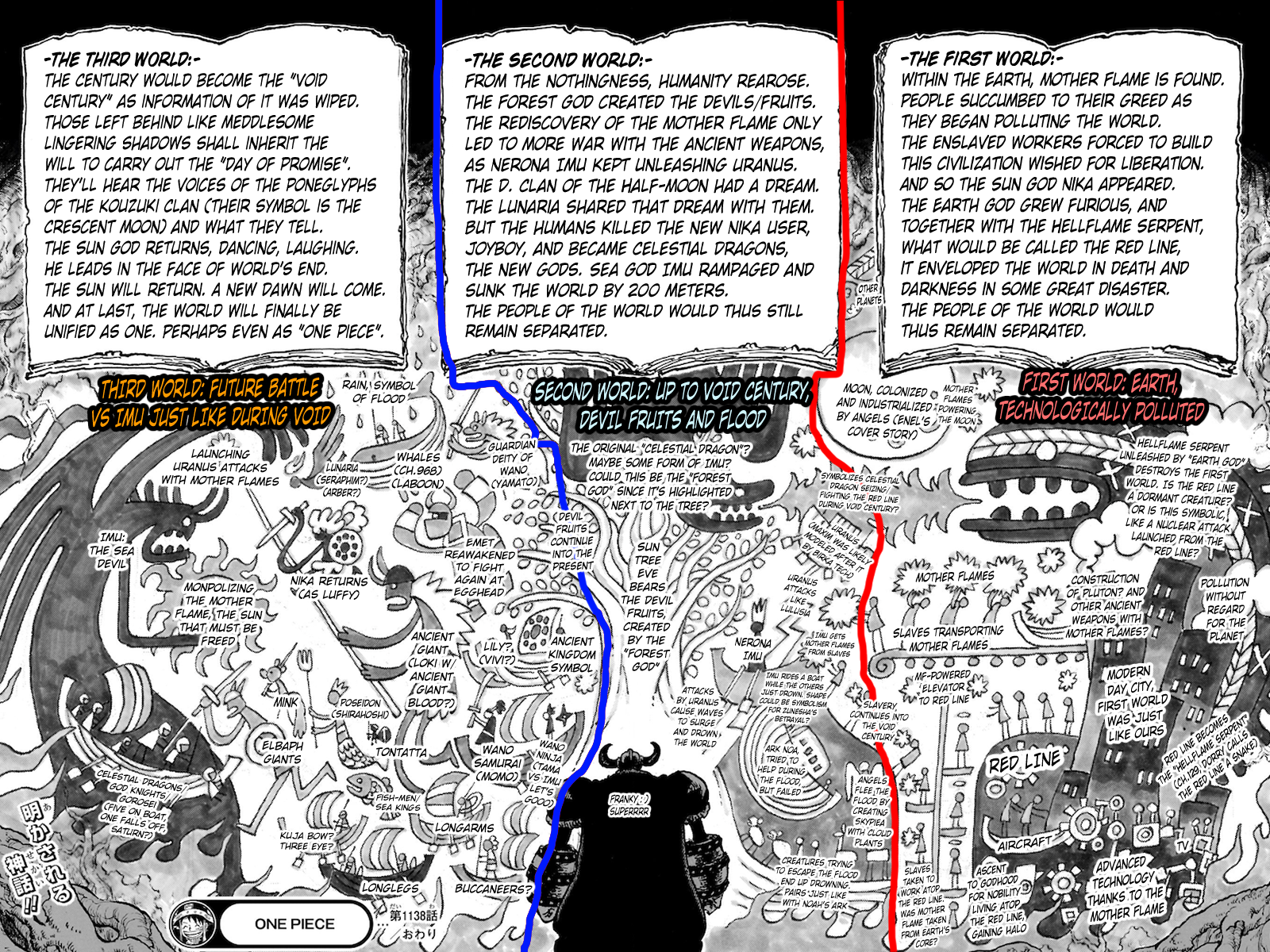
If you’re still curious about my interpretations of the Harley, here it is all summarized in an image!
 The Library of Ohara
G
LikeLike