
Video version: https://www.youtube.com/watch?v=4e5IQTyyOnA
Cover:
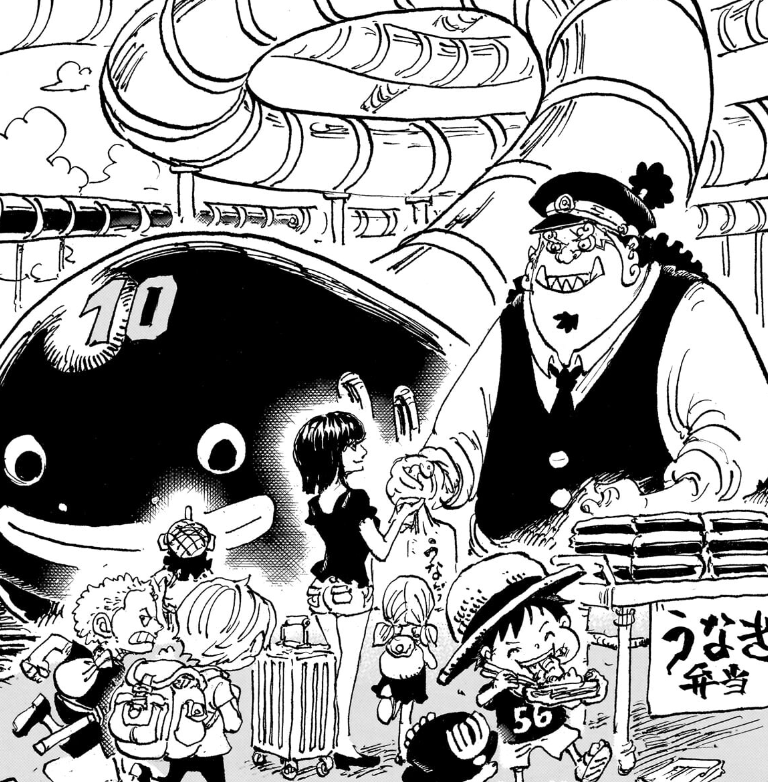
On the cover, we see Jinbe working at an eel train station, selling bento to the rest of the straw hats. Of course the idea of an eel train is very mucha Oda surrealism, but the idea of selling bento boxes at a train station is very much a mainstain of Japanese culture. As you may know, a bento is a lunch box stuffed with pre-prepared food, incredibly common at convenience stores and some shops as a way to get a balanced and healthy meal without the need to cook something complex at home or at a restaurant. These are common with children, especially as it’s tradition for parents to make them bento they can take to school so that their lunch is something healthier than just a sandwhich, but they’re also particularly popular at train stations, being known as “ekiben” or fundamentally “station bento”. This is because a lot of people who are going through train stations, particularly those that cross to other cities far away within the country by taking the Shinkansen, will eat on the train to make sure they don’t waste time, while still eating a balanced meal. So in this case, Jinbe is selling the group station bento for the long journey ahead. The grim aspect however is that as the kanji reads, these are うなぎ弁当 (unagi bento), or in other words eel bento, a common bento serving but also kinda weird considering that the trains themselves are eels. Are the trains alive, however, given those eyes, or is this purely thematic? Maybe we shouldn’t think that much about it…
The Straw Hats however are all children, tying into that aspect of bento often being served for kids, though in this case Robin appears to be the older sister taking care of the purchase while Luffy (with his iconic shirt with “56”, read as “go-mu”), Chopper, Nami, Usopp, Zoro, and Sanji, are all depicted as children. As a neat detail, Zoro is depicted with a single sword, because he is so young this was before he even picked up three swords, and Chopper is depicted still as a reindeer, as this would be before eating the fruit.
Loki vs Ragnir
We pick off right from where we left off, where we see Ragnir, with a will of its own, trying to attack Loki, which he barely dodges. As we had thought, Ragnir is indeed a hammer that has eaten a Zoan devil fruit and attained a will of its own. And as Harald explains, the reason the fruit has gone uneaten is because Ragnir has not deemed anyone worthy of eating it in all these years, testing anyone who would dare try to eat it. This actually relates to the original myth of Mjölnir, where it was said that the hammer was only lifted by very few individuals, primarily Thor and a couple of other exceptions in some myths. This myth evolved over time into the idea that only those who are worthy may lift the Mjölnir, so Oda in this case twists the myth around to make it so that Ragnir is instead protecting the fruit and will only let those who are worthy take the fruit (although it will also let the worthy wield it). Similarly, over time the idea that the Mjölnir is incredibly heavy was also developed, reflected here in how the hammer crushes the entire floor of the room that leads to the door, though it’s possible that by its own will it was trying to shatter the floor to stop Loki.
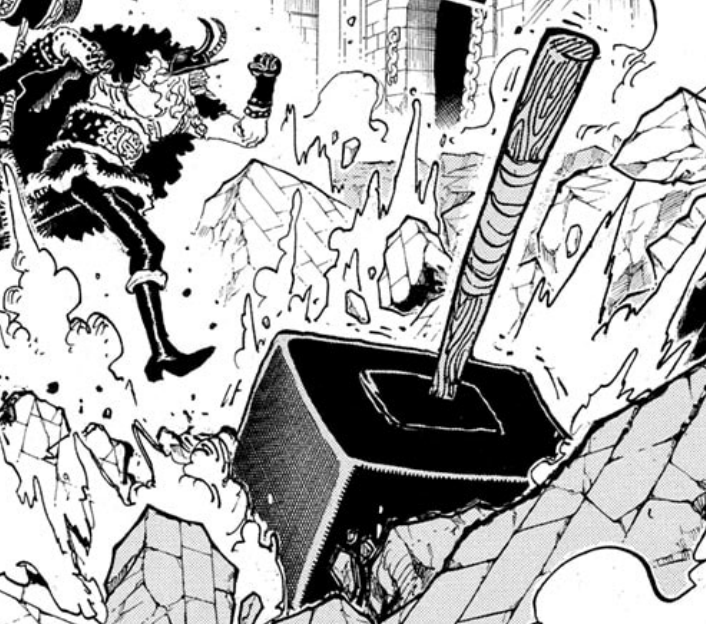
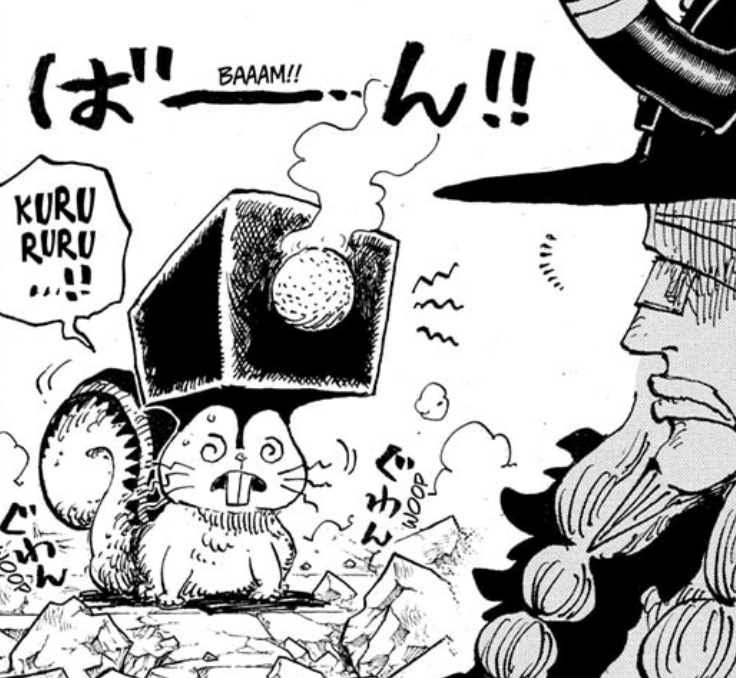
Loki tries to fight against the hammer, with both of them weezing out of tiredness, so they finish it with one last clash where Ragnir breaks Loki’s hammer. However, this leaves quite the bruise on Ragnir, so the hammer admits defeat and directly shows Loki to the fruit. As we see, the Ragnir has seemingly eaten a Zoan fruit, being some kind of squirrel fruit. If we continue with the connection to Norse mythology, then this is most likely the Ratatoskr, a squirrel that served as a messenger, delivering messages between the Níðhöggr found at the bottom of Yggdrasil and the eagles that perch atop the tree, though not much more is known beyond that. This could make it the Risu Risu no Mi (Squirrel Squirrel Fruit), Mythical Model: Ratatoskr, but we could also be overthinking things and maybe it’s just a regular Risu Risu no Mi. The odd thing is that Ragnir seems to be able to generate thunder, as seen by the lightning bolt that Loki brought down at the start of ragnarök and the same one he uses this chapter too, and while that is consistent with the myth of Mjölnir being able to summon thunder, it doesn’t connect itself much to the concept of squirrels or the ratatoskr. It’s possible we may have this backward too and that this is a squirrel that ate some kind of hammer fruit, but given the way that Oda has played with items eating Zoans before that option definitely seems a lot more likely. This does make me wonder about the life longevity of items eating Zoan fruits though, as it does seem the Ragnir has been protecting this fruit for a very very long time, but after all a hammer shouldn’t age.
Immortality
Switching back to Harald, Gabin and Shanks both attempt to stop him, with both of them seemingly using conqueror’s haki on him. Gabin more properly explains the weakness of the God Knights, elaborating that as we knew conqueror’s haki impairs the regeneration that immortality provides. However, it doesn’t stop it entirely, meaning that several conqueror’s attacks are needded in a row to properly stop someone fully from regenerating. Think of it in video game terms as someone who has an HP regen ability, but hitting them with certain attacks lengthens the cooldown of the HP regen, meaning that if you fully destroy their HP before their regen can keep up, they will die. This is consistent with the idea we’ve been told so far that haki can overcome the power of devil fruits, such as Law being unable to use his powers to simply teleport someone like Kaidou or Big Mom into water due to their enormous haki. So it makes sense that the powers of the devil, which albeit different likely run on a similar power system as devil fruits, are also limited by powerful enough haki, which weakens them and slows them down to the point that they are not able to regenerate the bodies quickly enough before they are killed. It is as Xebec said, there is no such thing as an eternal power.
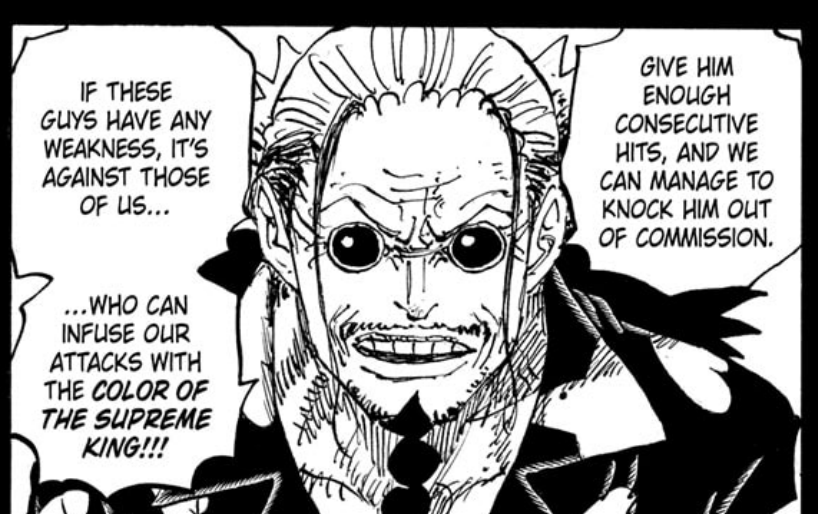
This explains why Sommers took a long time to regenerate after Gabin attacked him but ultimately recovered, because Gabin had no time to finish off Sommers as he was too busy saving the kids, so he just tried to incapacitate him for as long as possible while he tried dealing with Gunko first to free the kids. Given how we saw Saturn (though possessed by Imu, which likely powered him quite a lot) surviving a massive attack of conqueror’s all at once, it seems this has to do more with consecutive attacks than it does with a single attack all at once, though I’m sure this has a lot to vary from individual to individual based on their strength, as I imagine Harald’s immense strength is also what is making things hard for Shanks and Gabin. The latter particularly mentions that Harald himself being a conqueror’s makes it harder for these attacks to hit, which is similar to what Roger and Garp mentioned with Xebec being a difficult opponent to hurt because of his conqueror’s haki (as after all Domi Reversi involves pretty much the same system of regeneration that immortality does, it seems). So since Saturn is also a conqueror, that may be why he survived the mega attack on God Valley, and it’s likely also why Luffy struggled with hurting the Gorosei at Egghead since he did attack them a few times but not long enough to continuously keep up the assault and kill them.
Gabin further elaborates that he became familiar with the God Knights as they attempted to seize Shanks from them, but they were unable to last against the powerful conqueror’s haki of the Roger Pirates. Shanks claims to have heard the same story from Sommers when he came back to the Holyland, which finally explains Sommers’s trauma towards Gabin, which in the end was totally unrelated to God Valley.
Loki’s Fruit
As Ragnir gives Loki permission to eat the fruit, nodding and then happy that his duty has been fulfilled, we see Loki eating it, which funnily enough is incredibly tiny due to his giant size since they were built for human measurements, but appears to have some spiky shape, appearing to look like a durian or a lychee. At that point Loki transforms, though of course Oda decides to shadow it, making it a bit tricky to determine what he transformed into, but let’s try to decipher it. It does appear to be a Zoan, as we seem to witness Loki transforming into a large creature in what seems to both be its beast form and later its hybrid form as well. In his beast form, Loki appears to grow some kind of spiky fur or horns, while his hands instead become more canine like and with nails at its ends. As he transforms he lets out a powerful growl, which reads as “baooo” (バオ), being a fairly generic animal howl to not make it too identifiable.
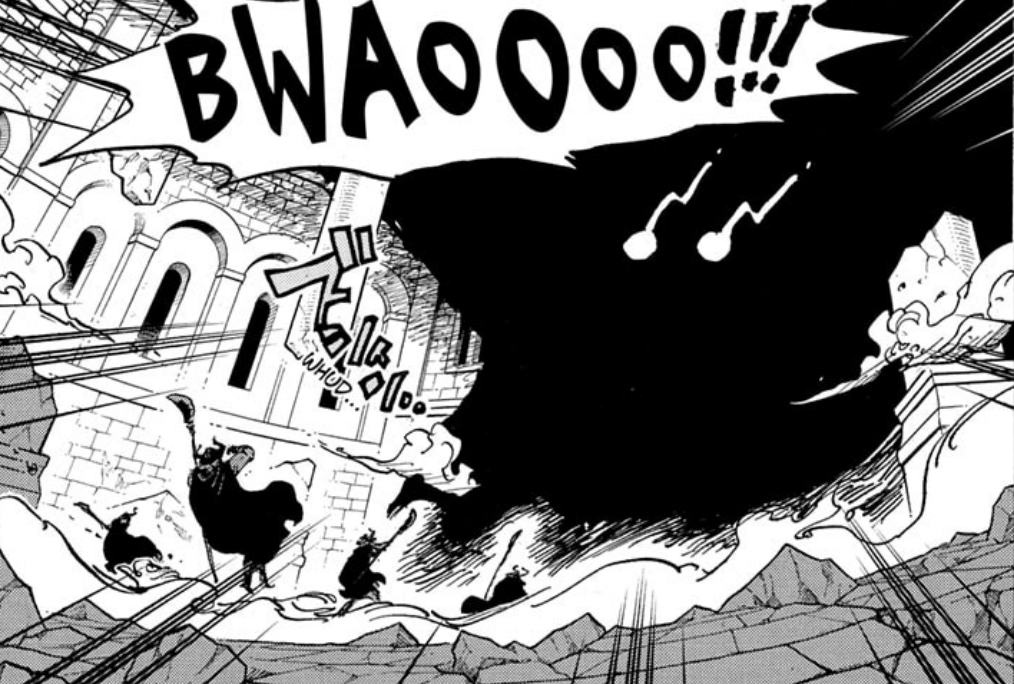
The large black silhouette with shining eyes is hard to make out, particularly as it seems to stretch upward, but it’s hard to say how much ot hte black shape is just the shadow cast by it or if this is an accurate outline, as most we can really tell apart is some kind of claw at the bottom left. In the next panel however we see the silhouette running through the castle and it appears to be running on all fours, suggesting it’s a quadripedal creature. The claws can be more clearly seen later, as Loki slashes Harald and leaves large claw marks on his body. These marks actually match those seen in the throne room many chapters ago in chapters like 1139, which we pointed out all the way back then could point to the idea of Loki’s fruit being some kind of mythical Zoan that left those claw marks.
Indeed, we see Loki continue to slash and slam Harald until he grabs him by the head, showing the silhouette of what appears to be his hybrid form. While the hybrid form doesn’t seem to show the helmet outline, it still has his ancient giant horns, which remember those are real, and while it keeps a more hominid shape, his head appears to have some form of snout. You can also very faintly make the outline of his gloves in the shadow, but his claws have extended even within the gloves themselves.
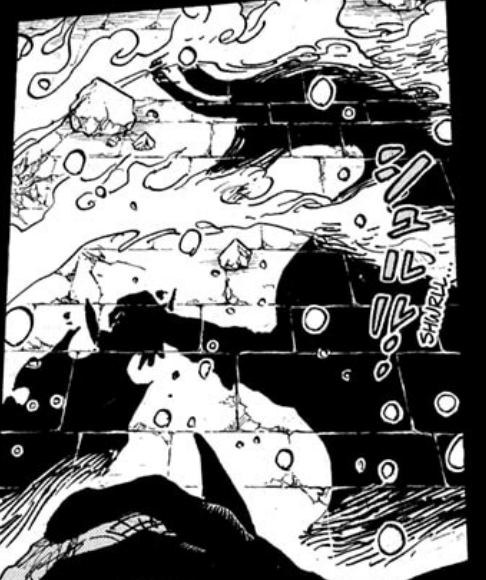
With these details, there’s a couple of ideas we can surmise about Loki’s fruit. A very common popular one would be the aforementioned Níðhöggr (what would be a Ryu Ryu no Mi (Dragon Dragon Fruit) Mythical Model: Níðhöggr). In Norse mythology, this giant dragon is said to be a being that dwells at the roots of the Yggdrasil, gnawing at the tree from low below, within what is Helheim, the realm of the dead. This would fit with Loki being chained at the roots of the Adam Tree, with the Underworld being inspired by both Niflheim (the frozen realm) and Helheim (the realm of the dead). When ragnarök begins, it is said that the Níðhöggr is unleashed, carrying the dead in its wings, though the dragon itself isn’t so much tied with causing Ragnarök unlike Loki or other individuals, but you could perhaps interpret it as Loki starting ragnarök and thus then unleashing the dragon. What really drives this connection further is the aforementioned ratatoskr serving as a messenger for the Níðhöggr, as well as more than anything that in One Piece, the Níðhöggr was written with the kanji of “thunder dragon” (雷竜, rairyuu), thus inferring that it has thunder powers, which was seen in the nightmare creation generated by the children and Killingham’s powers. This would explain why Loki is able to generate lightning strikes with the Ragnir, as it would mean it’s not a power of the hammer itself or its ability as a squirrel but rather part of Loki’s own mythical fruit, thus being able to summon lightning bolts with his powers as the Níðhöggr. The confusing thing is how Loki would be able to summon forth a lightning bolt while still being partially chained with seastone, but as we’ve seen in the past with Luffy’s fruit for example, seastone doesn’t necessarily make devil fruit powers impossible, just heavily weaken the user, though in cases like logia it does seem to make transformation impossible, while for Zoans like Luffy his body remained stretchy even when submerged in water or with seastone. So it’s hard to say if Loki’s thunder generation could be limited by the chains, though if it was indeed just Ragnir’s power then that wouldn’t be an issue.
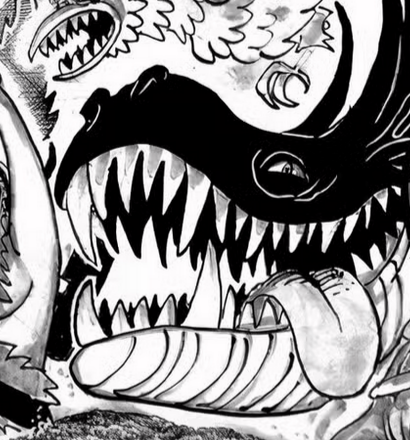
There is however another option, and it’s one that I’ve suggested before with the claw marks several times, which would be the Fenrir (what would be an Inu Inu no Mi (Dog Dog Fruit), Mythical Model: Fenrir). In Norse mythology, the Fenrir is a massive wolf, born as a child of Loki. In the myth of ragnarök, one of the kickstarting events of the apocalypse is Loki burning down the Yggdrasil tree, which we see him do when he is partially freed by Luffy and Zoro. This event is forteold by Fimbulvetr, a cataclismic winter that foretells the arrival of ragnarök, which in One Piece was seen with the great cold that enveloped Elbaph following Loki’s birth. In the myth of Fenrir, the wolf helps Loki not just by burning the Yggdrasil, but most importantly by killing Odin, the leader of the gods. This would largely fit with connecting the fruit to Loki, particularly as Fenrir is sort of the catalyst to unleashing ragnarök, and thus matches Loki’s claims that he will bring forth the end of the world. Beyond that, Odin being the leader of the pantheon of Norse gods also parallels the figure of Harald as King of Elbaph. In more modern incarnations of the myth Loki is even treated as Odin’s son, though this wasn’t the case in the original myth, but the powers of Fenrir being what allows Loki to kill Harald would make it fitting to match the myth of the leader of all gods in Asgard being slain by the powers of a wolf. Particularly as Loki inches the land towards ragnarök, kickstarting what will be the slow but eventual demise of the third world.
The Fenrir would also match the spikey fur that Loki developed, as well as the claws, which appear a lot more canine and sharp like those of a werewolf, though it’s hard to say since he could be mid transforming. The fact that he’s quadripedal more matches the Fenrir too, as the Níðhöggr of the children’s nightmares appeared to have feet but also had wings instead of arms, unilike the claws that Loki uses here. And the silhouette of the hybrid form does seem to show a lot more the slender mutt snout than the more voluminous jaw of a dragon. So on one hand, I’m more inclined to believe Loki has powers relating to the Fenrir than the Níðhöggr just because the silhouettes match more and there’s better thematic connection with starting ragnarök. But on the other hand, beyond the connection with the ratatoskr, I can’t ignore the idea of the Níðhöggr explaining the lightning powers of the Ragnir would clarify a lot of things. Especially when you take into account that Níðhöggr being a lightning dragon is not an element from Norse mythology but rather a purely One Piece made creation, with Oda going out of his way to include a different kanji reading and showing the Níðhöggr nightmare casting lightning bolts just to justify this power.
And mainly because when you think of it, if Loki is the Fenrir… what exactly makes him that devastating of a power? In Norse mythology Fenrir is just a really big and scary wolf, which sounds imposing, but for One Piece standards, how much different would that make him from someone like Jabra? On the other hand instead, the Níðhöggr is a dragon with the power to summon lightning, which we saw left a devastating mark on Elbaph, with a power not too dissimilar to that of Enel, who already was seen had the ability to destroy small islands (although this was through his powers being augmented by the Ark Maxim’s machinery), which is heavily reminiscent of Uranus’s ability to destroy Lulusia. And thus reminiscent of the drawing of the Harley with the dragon over the large tree with the thunder striking it. Which we’ve taken this far to being the devil fruit tree, the lightning coming from the ship representing more Uranus’s strikes led by Imu which causes the flooding seen in the wave to the side, but what if this dragon had some connection in all that, as we haven’t yet explained the presence of this dragon? After all, we know that dragons are sort of sacred to the Celestial Dragons. Not only are they named after them, but Kaidou’s fruit was originally in thier possession. After Kaidou stole it, Vegapunk cloned his fruit (which eventually Momonosuke took), and later went on to create artificial dragons in Punk Hazard under Celestial Dragon orders. And doesn’t Dragon Number Thirteen which the straw hats fought resemble the nightmare Níðhöggr quite a lot? So perhaps this fruit had a lot of value and importance in the Void Century but was ultimately seized by the giants. Xebec seemingly wanted the fruit to be eaten by Harald to take down the Government (which to be fair, to lead an airborne assault on Mary Geoise a dragon would be pretty ideal), while Imu similarly wanted Harald to eat the fruit to turn him into an unstoppable warrior. A mistake Mu may come to rue as Mu faces Loki in the present.
So while the Fenrir better matches the silhouettes and some connections, the Níðhöggr, despite some inconsistencies could much more explain Loki’s lightning powers. So it’s all down to you in the end which one you think he will have, or if we’re wrong entirely and it really is a whole other creature, but at the very least we can be confident it’s a Zoan and not something like the Gomu Gomu no Mi. I do wonder though how this all connects with Loki’s claim that he is the Sun God who will bring forth the end of the world, but perhaps it really isn’t connected to his fruit, but rather Loki simply believes himself as Nika given how he projected that on Xebec previously and the fruit is simply separate to it all.
Loki and Harald
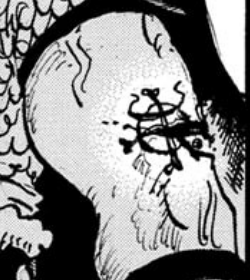
It doesn’t matter as Oda won’t show us anyway, since Loki returns in his regular form. Harald regains some of his consciousness as it seems that the haki attacks have been undoing Imu’s influence for a brief period of time, limiting it the same way that the regeneration is lagging behind. This again reinforces the idea that conqueror’s haki stops all of Imu’s powers, not just the regeneration, much like with devil fruits. Weirdly enough, as Harald claims to be taken over, his Abyss mark begins to change. An additional line and “bone” for lack of a better term appears to begin diagonally, which wasn’t present previously with the last incarnation of this symbol we saw. Is this a drawing mistake or is Oda suggesting that Harald’s mark is being upgraded to the next tier as seen previously? Perhaps Imu is growing worried Harald might get killed and is upgrading him to the Deep Deep Sea Contract as a quick emergency measure to make him even stronger and so that Imu can take over his body to fight Loki directly rather than just controlling him, which so far seems to be an exclusive Gorosei + Gunko power from what we’ve seen. And it’s hard to think of it as a mistake given the zoom in on it with a dedicated panel with Harald claiming it’s taking him over again, but I wonder if it means the mark is upgrading or if it’s just taking more control. Though I do wonder why Imu or the Gorosei didn’t just use the Abyss in the throne room or if they just didn’t account for that quickly enough.
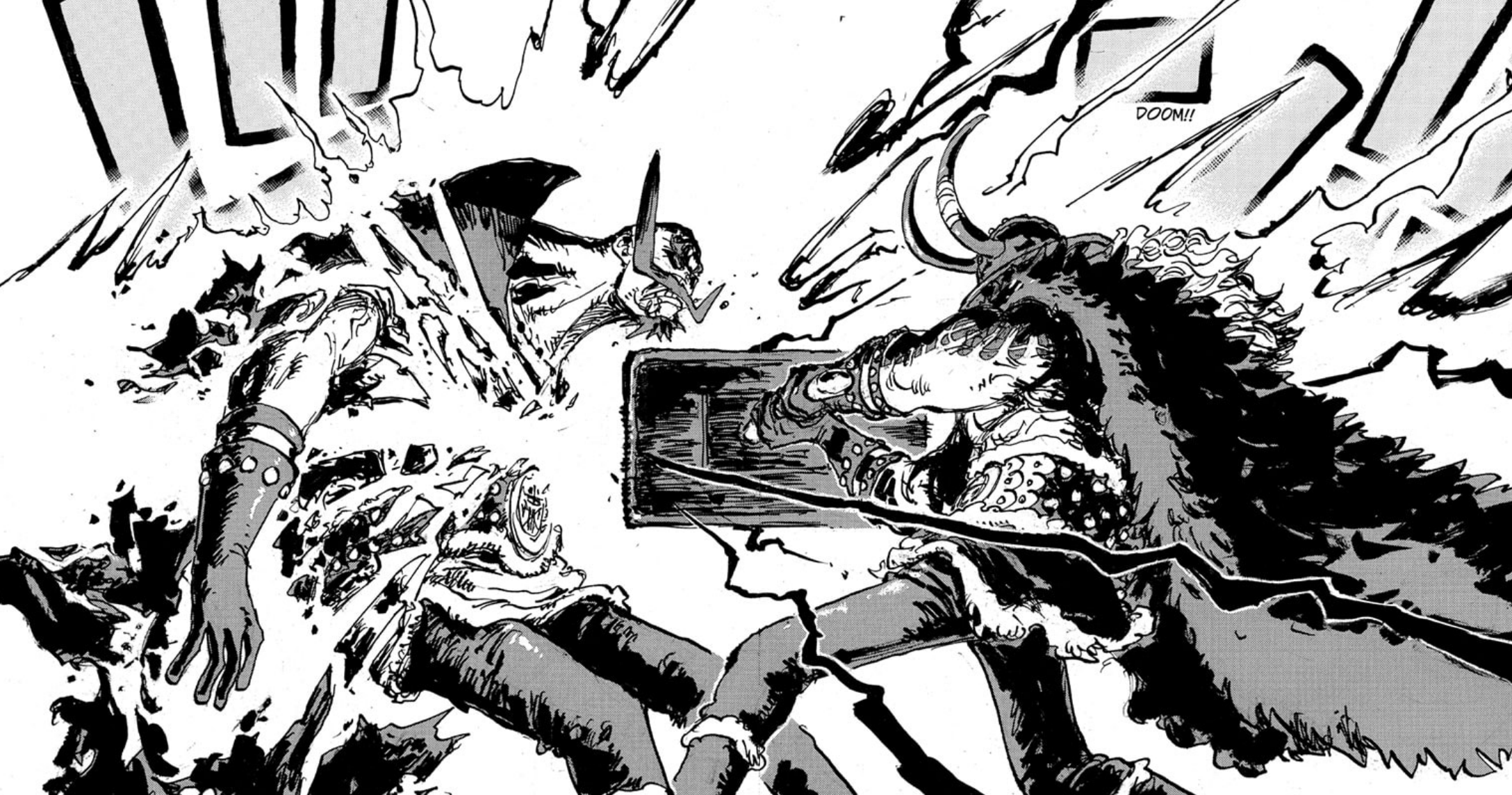
Thus, Loki has no other option but to kill his father, delivering the final hammer strike and thus summoning a powerful lighting bolt which crashes into Aurust Castle’s throne room, concentrating into the Ragnir, which finally explains the large hole in the roof we saw in the throne room when Shamrock and Gunko arrived. Although it would seem the roof already partially ruptured earlier due to the damage Loki caused, as beginning from the panel of Loki in hybrid form, we can see snow falling around them, and surrounding not just the throne room, but also the entire castle and the rest of Elbaph as we see from a glimpse of the Walrus School. We’ve seen the symbolism of snow used several times to symbolize death, primiarly during Ida’s death, which could tie into the concepts of Fimbulvetr and the heavy snow associated with Norse mythology and northern lands in general.
Regardless, the powerful thunder is accompained by the “bari bari” (バリバリ) sound effect, which as we’ve mentioned before is the sound of thunder which is often used to indicate the cracking of haki, but in this case it both serves to indicate the thundering haki as well as the thunder itself. Interestingly, though Harald smiles at Loki in his final moments as he tells him he loves him, with the smile often being a sign of contempt in death with inherited will, in the very final panels Harald instead loses his grin. Perhaps from the sheer impact alone and I’m overthinking things, but maybe it ties into Loki’s inability to carry on his wishes as Elbaph becomes frozen in time for several years.
As Loki kills Harald, we can see Shanks crying next to Jarul, as he said before he wanted to try and save Harald, but realize he was not able to. Though once again, I wonder with them as witnesses why they kept the truth about Loki silent, particularly as Shanks would defeat and capture Loki at sea six years ago, around the same time he became a Yonko. After this day though, the people of Elbaph would assume that Loki murdered his father purely for violent reasons. His whole life, every single act of his was misunderstood. From birth, it was prophesized that Harald would be killed by his own son, but in the end it seems that either was only a mere coincidence, a rumor spread by Estridda, or potential even a real foretelling like Shyarly’s but missing the actual context. He was blamed for killing the royal family’s lucky horse, though it’s implied that it may have been due to the continuous abuse that Loki’s mother and her brother caused on him. Loki was blamed for the cataclysms on Elbaph as well as Jorul’s death at Linlin’s hands and the death of his own mother, despite none of them really being his direct fault. Loki was blamed for unleashing the Underworld’s creatures on the villages of Elbaph, though that clearly was out of a desperate bid for attention, even considering forfeiting his life. He was blamed for setting a village on fire as a prank, but the truth is that he did it because those same people had killed his mother. And of course, the claim that he murdered his father in cold blood was so lacking the important context it required. This is not to say Loki may not have been a violent and irritable man, as caused by his troubled upbringing, but it is clear that Ida’s kindness changed him, and deep down he simply wants to be accepted, in a society that refuses to understand him.
On the other, instead, Harald was praised, beloved, and blindly adored, but he was naive and gullible, risking his people’s future due to his own obsessiveness with accomplishing his goals. It’s clear Harald is someone who struggles to focus on the opinions of others, even if not out of malice, as he never noticed much of Loki’s abuse on him as a child, and he also ignored Ida and Saul’s warnings about joining the Government. But in the end, he still owned up to his own mistakes and put everything on the line for the sake of the future of his country, for despite his misguided actions, that was always what he firmly believed in, and he kept believing in until his death. Perhaps Harald may not have been the perfect and adored king that people expected him to be, but a real flawed person with his own naviety and weaknesses. Yet much like his son, despite both being misunderstood in different ways, both held that love in their hearts that Ida had so dearly left behind.
 The Library of Ohara
I don’t think that was a new diagonal “bone” on Harald’s Knight symbol. The diagonal line is from the chunk of his arm that is still missing, as it’s mid-regeneration from Loki’s previous claw attack.
This seems to imply that if you destroy a Knight’s left arm, Imu’s psychic hold on them will be broken until the arm (and symbol) can reform.
LikeLike
Fenrir or Níðhöggr could fit a “Mythical” zoan (like Marco’s phoenix), but this power was described as “Legendary”, which is more similar to Luffy’s, which is likely a hybrid of multiple powers, or a onepiece version of other myths. Probably a wolf that can generate lightning.
And it seems there is a relation between Ragnir and this power, as if the lightning generated by it is attracted to Ragnir like a lightning rod.
Not to mention the similarities to Xebec: he also had a weapon that caused explosions, was equal in power to Harald (similar to Loki, they both had a similar clash panel with Harald). his haki had a cracking sound effect like the thunder here, BB’s goal to destroy the world, and the massive lightning bolt that struck after Xebec death is similar to the one that struck Harald. I would say Loki’s power is related to Davy Jones in some way.
LikeLike
Great analysis
LikeLike