
Video version: https://www.youtube.com/watch?v=rpE-KZDQcF8
Xebec and Loki
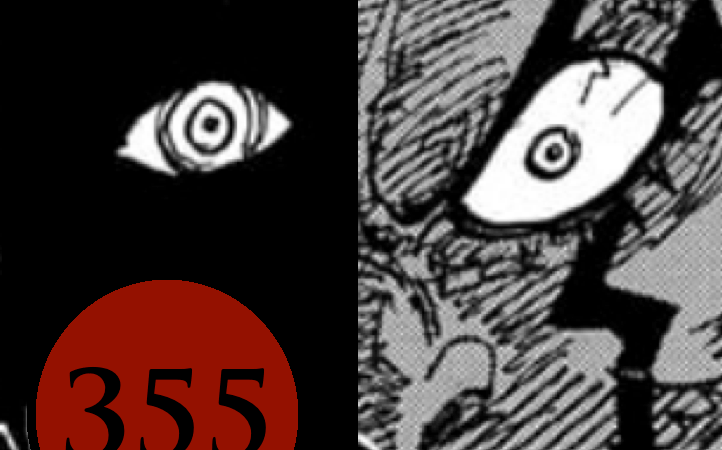
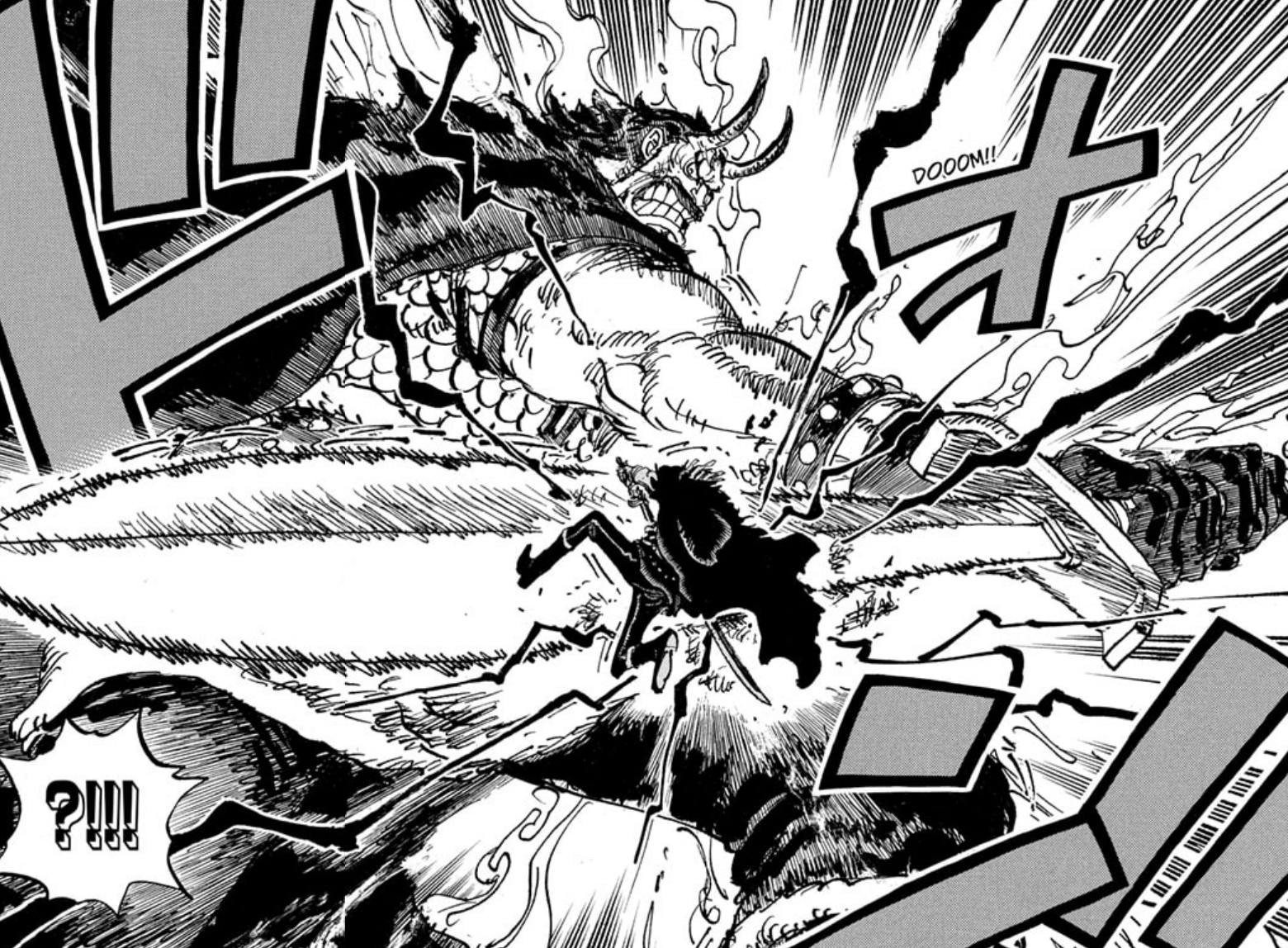
We pick off from last time as Loki talks with Rocks, referring to him as a “chibi ningen”, or “chibi humans”, which interestingly is a similar term to what Harald used to refer to humans before Ida helped him change. Of them, however, Stussy finds this remark cute. Within this shot, you can see just how much Whitebeard towers over the lot of them, and on his back he carries a naginata, hence the belt around him, which might even already be his famous Saijo O Wazamono supreme grade, the Murakumogiri.
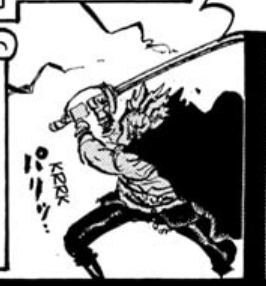
Loki however refuses to bend to Xebec’s demands, but Xebec instead hits him with his sword, likely what cut the mountain in half last chapter, and able to injure even someone as strong as Loki who couldn’t die from falling from the Sunworld. We see the sword cracking with lightning, likely an indication of conqueror’s haki, especially with what we see later, delivering an attack so powerful that the narrator describes it like a giant hammer causing an explosion. However, when he assumes this pose, it looks incredibly similar to that of Roger about to perform his iconic attack, but even further the sound effect around him is “pari…” (パリッ…). Uusually the sound effect for cracking haki is that of “bari” (バリ), which represents the sound for cracking thunder in Japanese, but in this case it’s with a harder P sound, almost as if the cracking were even more intense than normal, showing just how powerful his haki is. During this scene we also get Xebec’s own unique laughter, which is “Voha ha ha” (ヴォハハハ).
Xebec and Imu
As we pan back to the 1468 Levely of 56 years ago, we see the moment when Xebec had infiltrated Mary Geoise, but shockingly, he made it farther than anybody ever did, not before, and not since, managing to infiltrate the Flower Room where King Imu resides, managing to meet the elusive King face to face. Xebec and Imu stand next to each other on opposite ends of the room, though neither are unbothered because they both realize they cannot take down the other. Xebec clearly realizes that Imu is far too powerful, and likely even immortal, to be taken down right now, whereas Imu likely realizes how powerful Xebec is that he’s not someone anyone will be able to easily kill here without letting him escape, even if Imu did probably try.
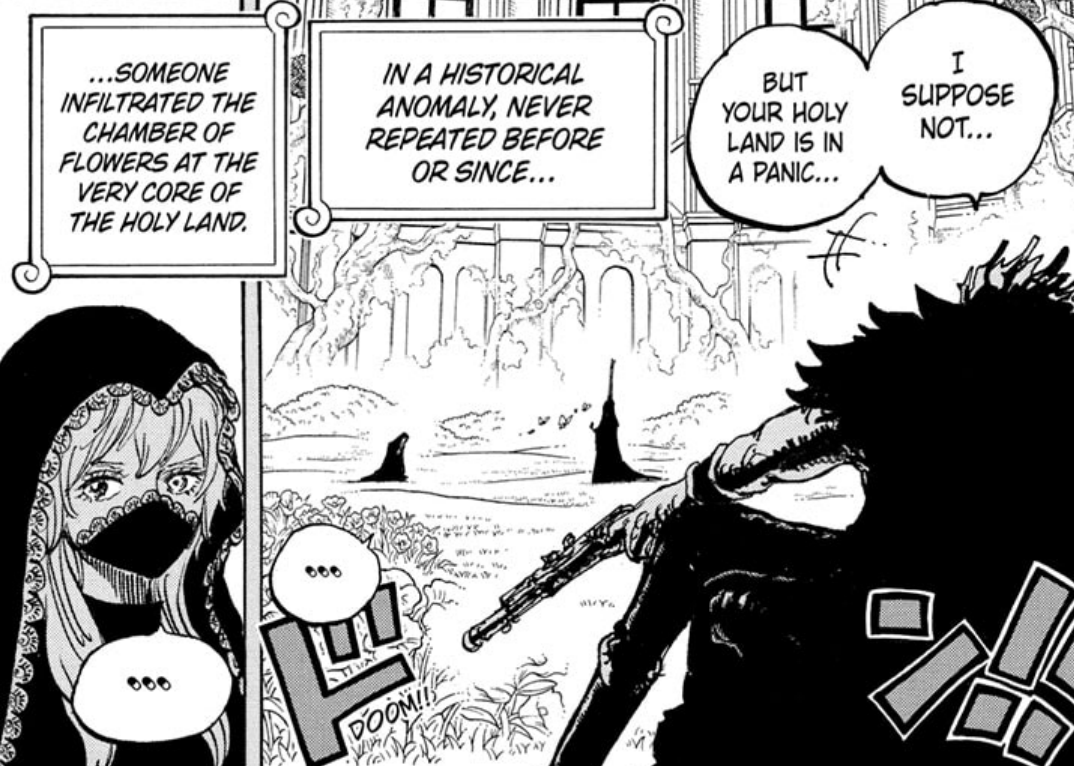
Shockingly though, there’s a third party in this room, a veiled woman seemingly serving as Imu’s attendant. We saw a similarly kneeling attendant in the first appearance of the Flower Room when they came to inform Imu that the Gorosei had gathered in the Empty Throne Room, but while they had a female voice in the anime, it’s hard to say if this was the same attendant we see here, as the individual here clearly appears to be Gunko. The heterochromic eyes are undoubtedly the same, with the only difference being having longer hair, though surely the mark doesn’t stop the God Knights from shaving their hair. At the very least though, it makes perfect sense that it would be a God Knight who is serving the King directly, as they are those who already have witnessed Imu’s existence.
I do have to wonder if this is explicitly Gunko though, or how she got to this position, as obviously she’s perennially youthful, but we did see her as a child alongside a younger Brook. The thing is though, while Brook did die 50 years ago, 6 years after this Levely, he had already been a pirate for quite some time, so the two could have grown up together just briefly before Gunko became a servant to Imu here.
While we’re on the topic of Gunko, I’d like to mention something very quickly that you may have missed, and it’s the fact that in the latest volume release, Gunko’s title box was updated, changing it from simply “God Knight Gunko” to “Saintess Manmayer Gunko”, while Shamrock also similarly got his Saint title too as Saint Figarland Shamrock, debunking any theories that they did not have titles of sainthood. The Manmayer family was already previously mentioned during the God Valley incident by one of its members which was fighting in the Genocide Tournament. As a reminder, male Celestial Dragons use the honorific “sei” (聖), which means “saint”, or “holyness”, while the female Celestial Dragons use the honorific “gu” (宮), used for female members of the Japanese imperial family, which you could translate as “saintess” or “lady”. Ivankov claimed that during the Void Century there was an individual called “Saint Nerona Imu”, indicating that the Nerona Imu of that time was seemingly male, but there’s always the possibility that Imu may have swapped bodies across the ages, such as with Lily or others, or even surpassed such notions by becoming an immortal devil, so it’s hard to say what their current sex or gender even really is.
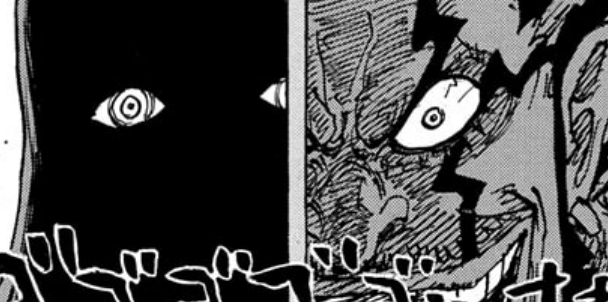
Xebec simply declared himself as being “a worshipper of Davy Jones”, with the term used, “suuhaisha”, meaning “worshipper” or “adorer”, used to refer to a person who you worship so much that you almost view them as a deity. Now this name is very interesting, and we’ll get to it in just a moment, but Xebec simply leaves Imu with one threat: “I’ll be back. Right here.”, a threat that is essentially telling Imu that “one day I’ll be back for your throne, and I shall become the King of the World”. As we glance one final glimpse at Imu we can see their veil fluttering, though this definitely seems to indicate this isn’t hair, but rather a veil worn over their head just like the one Gunko is wearing.
Xebec and Harald
As Xebec ran out though, he ran into Harald, causing a clash between the two. Evidently, both are using Conqueror’s haki, as the loud cracking of “bari bari” (バリバリ) thunder cracks can be heard, to the point that neither of their blades are even touching. So powerful is this clash that it literally eradicated every person in a 5 kilometer radius, which five kilometers seems like overkill on Oda’s part given Mary Geoise’s size as we’ve seen it so far, but the term used here is that of “keshi satta” (消し去った), which literally means “erased”, or “wiped out”, “evaporated”, implying that not even bodies were left behind as we see nothing but air surrounding them where before there were countless soldiers and Celestial Dragons. The gust is also powerful enough to fully extinguish the fire on Harald’s body. Quite frankly, I think this might be a contender for the strongest clash we’ve seen in One Piece thus far.
Harald, with Xebec in tow, decides to escape to the New World by literally leaping off the Red Line, which may seem insane, but considering that his child survived a fall from the Sunworld, all the way up into the clouds, a fall straight into water may be survivable if only to these insanely powerful individuals.
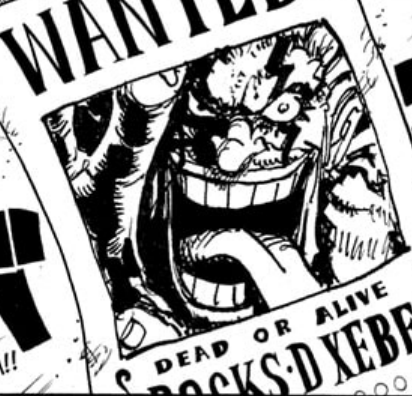
The crime of infiltrating Mary Geoise and having killed a Marine Admiral instantly made Rocks famous, though this claim seems to indicate he was not that well known beforehand. We get a glimpse at his bounty poster, though sadly the bounty number is cut off, only able to see the final three digits. Given the space they take proportional to the bounty poster, it seems that the bounty includes at least nine digits, of which I’d expect no less, but it’s also possible that it could be ten digits, so it’s hard to say if it reached into the billions or not. Most striking however is his pose in the bounty poster, as it’s fairly identical to that of Buggy’s bounty poster, once again reinforcing people’s theories that Buggy may indeed be Xebec’s child, with Roger having taken in both the baby of Garling and the baby of Xebec.
Some time later, Xebec would raid a Government ship carrying heavenly tribute, which was seemingly traveling through the Tarai Current. However, the Tarai Current cannot be escaped without someone opening up the Gates of Justice, so Xebec simply… destroyed the Gates of Justice to escape, a feat that is insane if you remember the sheer size of those gates.
Xebec and Davy Jones
However, following this, Xebec set his sights on building a pirate crew, particularly through the ancient pirate tradition of the Davy Back Fight. And this is where the aformentioned statement of “worshipper of Davy Jones” makes a lot of sense. As a quick history lesson, I’ll let Robin explain after she was asked about the origins of the Davy Back Fight.
“There’s an island out there in the sea considered to be a paradise for pirates: they call it Pirate Island. On that island, long ago, a game was born… It is said that, to get their hands on the best seafarers, pirates would use this game to steal other pirates.”
“[Davy Jones] was a pirate from long ago who had been cursed by the Devil to live in the depths of the Sea Floor, where it is said he yet lives to this day.”
“Or so the legend goes… All ships or treasures that sink to the Sea Floor would become his possessions as boatswain, as they would sink into his locker.”
“Davy’s name is associated with possessing all that sinks, so pirates call stealing others from your enemy as “Davy Back”.
In the SBS Oda further repeated the myth with some slight more detail, referring to it also being a legend in our world that is very similar, describing it as:
“There once was a lying, no-good pirate named Davy Jones. He was a greedy fellow famous for shutting his crewmates’ belongings and treasure and such into his own locker. Even for a pirate he was a bad guy, and one day the Devil cursed him to live forever on the Sea Floor. Since that time, whenever ships, sailors, or treasure sink into the sea, they end up shut in his locker on the Sea Floor, and never seen again. That’s the legend.”
Oda further also provided a doodle of Davy Jones, though hard to say if he meant this as the real life myth of Davy Jones or the one in One Piece.
However, what if this isn’t a legend, but in fact the reality? What if the pirate Davy Jones that future pirates would be inspired by was in fact a real individual who lived in the past of this world? After all, the legend makes mention of a certain entity: the Devil, a being who we now know is very much real… in fact being the King that sits at the top of the world. So what if Imu at some point in the past cursed Davy Jones by making him sink. Or perhaps a more realistic interpretation, what if Davy Jones was caught in the second calamity and sank alongside the world? Is there any validity to Davy Jones yet being alive, or is that the more fantastic part of the tale? And furthermore, we really need to ask ourselves the question… was Davy Jones a yet unseen individual… or could he maybe even be Joyboy himself? Well, the description of him being a really bad guy if anything seems to pit him more as a Rocks-like figure opposite of Joyboy rather than the man himself, but it’s hard to say for sure. Regardless, it is clear that Xebec declaring himself as a Davy Jones fan to Imu left an impression on the King, as Imu may have been responsible for sinking the original Davy Jones, and thus may see Xebec as someone coming back to avenge him.
However, this myth led to many years later the develoment of the pirate game Davy Back Fight, a game that developed on the pirate paradise that is Pirate Island. “Kaizokujima” (海賊島), translating to Pirate Island, is also known by the alias of “Hachinosu” (ハチノス), translating to Beehive, a name which was said to be an interchangeable alias, in much the same way that the Island of Justice is also equally known by the name of Enies Lobby. And of course it’s the island we’ve seen many times later on, but we’ll focus on that in just an instant too.

Xebec clearly admired Davy Jones quite a serious amount, so it’s not surprising that he would partake in a lot of Davy Back Fights. This was something that was already largely assumed by fans given the association Xebec was said to have with Pirate Island in Chapter 967. This is actually similar to Foxy’s backstory from his vivre card, where he was a failed boxer, having lost his license due to having been found cheating on the ring, and was lost for several years until he became fascinated with the myth of Davy Jones and the Davy Back Fight. We see here Xebec partaking in several of those Davy Back Fight games, including one of boxing, referring to the final Combat game between Luffy and Foxy at the end of their Davy Back Fight. We also see several bounty posters flying through, including one for Edward Newgate, though the bounty is too blurry to see, and another unknown one, though it looks a lot like Don Marlon from later in the chapter.
Rocks Pirates
Through these fights, Xebec accumulated an impressive crew of six, which he brought to Aurust Castle with him to meet with Harald. Xebec wants Harald to become his “nakama”, but Harald is trying to find a way to collaborate with the Government without having to join them and wishes to opt for a more peaceful path. As we see him talk more and more across this chapter, we can see that Xebec’s speech pattern is actually not that far removed from that of Blackbeard, sounding like a gruff pirate.
However, we get a proper introduction to his pirate crew, composed of six, of which seemingly Whitebeard, Shiki, and Stussy were his closest men as they were the ones seen with him the most last chapter, which makes sense as they’d go down in history as the most infamous ones.
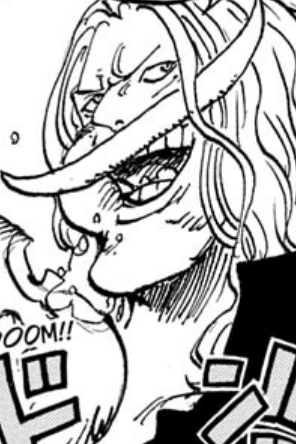
Without any need for introduction we have of course the pirate Edward Newgate, known in the future as “Whitebeard”. We know that he set as a pirate in his youth, before he even had a mustache, in hopes of finding a family, having lost his as an orphan of Sphinx Island.
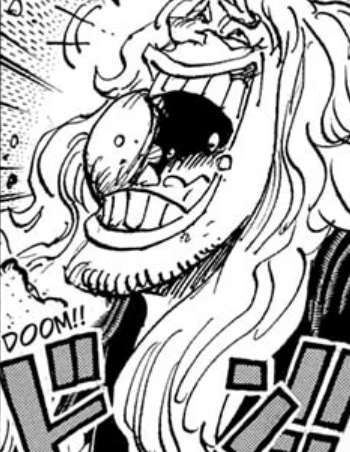
Next is Shiki the “Gokudo”, known in the future as the “Golden Lion” (kinjishi, 金獅子). The epithet “Gokudo” (極道) is a very complex Japanese term, as breaking it down it means “the extreme path”, but it generally carries a meaning of “pure evil”, or a “wicked soul”, so you could translate it as something like “Shiki the evil”, or “Shiki the wicked”. However, there’s more nuance to it, as the term “gokudo” is fundamentally a synonym for the underworld, or organized crime, particularly used as an alternate word to refer to the yakuza in Japan, the organized crime families. And this is fitting as Shiki does carry a Wanoesque attire, and we’ve seen him behaving like a yakuza boss before, particularly during his ceremony in Strong World where he exchanged sakazuki, or sake cups, with his underlings to welcome them into the family, a tradition that is particularly common in yakuza families. Shiki of course would go on to become a legendary historical figure, becoming one of the most prominent figures of the Era of Roger alongside Whitebeard.
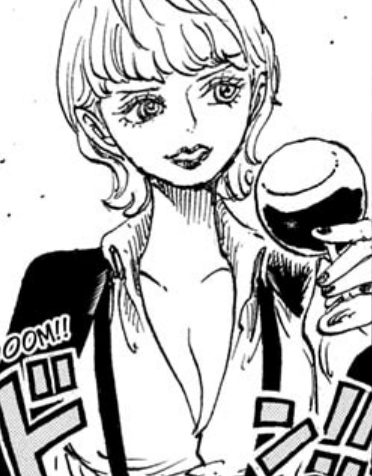
Following is Miss Buckin, the “Science Robber”, or known by her full name of Buckingham Stussy. The epithet of “Science Robber”, or Kagaku Goutou in Japanese (科学強盗), is actually quite fitting, as we know that after the fall of the Rocks Pirates, Stussy would go on to freeload with MADS, the clandestine team that was composed by Vegapunk, Caesar Clown, Vinsmoke Judge, and Scien (later known as Queen), so it makes sense she’s not only involved with science, but also took advantage of it. Furthermore, Stussy claimed later in life to be Whitebeard’s lover, claiming that Weevil is indeed Whitebeard’s child, even making the claim that Vegapunk could prove their relation, which was led many to wonder if Weevil could be the result of some cloning experiment or something like that.
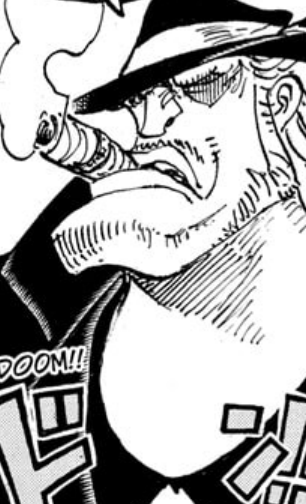
The following individual is someone new, being Don Marlon, known as “West Blue’s Gang” (西の海のギャング). His epithet makes it very clear that Marlon is associated with the Five Great Families of the West, referring to the five criminal gangs that rule the West Blue’s Underworld. These families would each be at odds with each other, but were particularly thrown into chaos when a young muscleman by the name of Capone Bege began assassinating the heads of the organizations. Eventually becoming a family leader, earning the epithet of “Gang”, he continued to take down rival heads, but had no interest in their territory, only valuables and the satisfaction of taking down the king piece of rival families to cause them to collapse. He eventually grew tired and set out to sea to do the same as a pirate.
As such, it makes sense that Don Marlon may have been a previous influential figure of the Five Great Families, as he seemingly had the original epithet of “Gang”, so Bege may have actually been given his title after Marlon by inheriting his epithet. It’s also possible the two may even be related, as Bege is 42 years old, but who knows. Marlon’s own name is likely derived from the actor Marlon Brando Jr., who was famously known for playing the role of the mafia boss Vito Corleone in the iconic film The Godfather, fufilling an iconic cinema role pretty much identical to that of Don Marlon. Similarly, Bege is obviously named after Al Capone, while the Five Great Families are inspired by New York’s Five Families which ruled its Underworld.
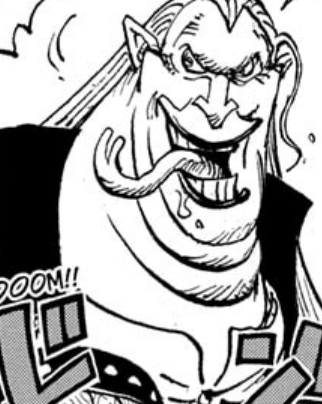
Coming up is Ouchoku, the “Founder of Piracy”. His eptihet, “kaizoku kyouso” (海賊教祖), is another quite nuanced epithet, as the term “kyouso” is one that refers to the founder of a religion, or the pioneer of a religion. Some may translate this as the “Pirate Guru”, but while the term “guru” did occasionally refer to a religious founder or expert, I feel these days this term has largely been twisted to simply refer to an expert in their field in a way that I feel it doesn’t quite carry the same nuance as it does in Japanese, especially as the Japanese dictionary definition likens the term kyouso to individuals such as Jesus Christ or the Buddha. Fundamentally, this epithet treats Ouchoku like the founder of piracy almost like a religious messiah, but this is likely not meant too literally that he invented piracy, what with Joyboy being the “first pirate”, but rather as a figure so influential some treated him like a religious messiah that helped found piracy into what it is today.
Of course, the name Ouchoku should sound familiar. He was mentioned as one of the most famous men of Xebec by Sengoku all the way in Chapter 957, finally making his debut after 6 years. His name, Ouchoku (王直), is derived from the Japanese version of the name of real life famous Chinese pirate Wang Zhi, who was known as Ouchoku in Japan, combining the kanji for “king” and “straight”, which is why you might see some translations using the name “Wang Zhi”, but let’s be very clear canonically in One Piece he’s known as “Ouchoku”. As we know, and are reminded here as well, Ouchoku would eventually become the leader of Pirate Island, though this chapter precises he would have the title of “Teitoku” (提督), or Admiral, which is the same title Blackbeard now holds, which makes sense as it seems to refer to the ruler of Hachinosu. For clarity, this is not the same Admiral as a Marine Admiral, which is known as a “taisho” (大将), but rather referring to a Pirate Admiral, as unfortunately in English there isn’t as much distinction between these two terms as there is in Japanese.
Ochoku would seemingly rule over Hachinosu after Xebec’s death, until Blackbeard would eventually take power during the Rocky Port Incident during the timeskip, dethroning Ouchoku and becoming Admiral of Pirate Island himself. Though the fact Ouchoku kept this position for who knows how many years shows he was clearly a fearsome pirate. Interesting as well is also his appearance, as he looks like a draculean vampire, making him incredibly reminiscent of King Seki, the ruler of Lulusia (as Lulusia is seemingly inspired by Romania and Dracula), which makes me wonder if Ouchoku has any native roots with Lulusia. More than anything though, his appearance is clearly far more similar to that of Caribou, with his eyes, mouth, tongue, nose, and pointy ears all matching quite similarly. The fact he was treated like a religious laeder also might connect with Caribou’s claims of praying to a god.

And finally we have Ganzui, the “Smuggling Pirate”. His epithet of “Mitsuyu Kaizoku” (密輸海賊), or Smuggling Pirate, is pretty self-explanatory, while the name Ganzui is written just like that in Japanese, so it most likely is romanized like that, though hard to say if it really means anything, as the closest connection is sounding like the transliteration of “guns”, but that would be without the “i”. He is a figure we’ve seen before though, as he was seen not just among the Rocks Pirates in God Valley, but also as one of Moria’s zombies alongside several other crewmembers, likely having perished during that incident. Many assumed this to be Ouchoku for a very long time, but it’s clearly not the case now.
Beyond these first six, we do know in the future that many other famous pirates would join the Rocks. That includes of course, Charlotte “Big Mom” Linlin (and Streusen with her), Kaidou, “Captain” John, Gloriosa, and seemingly Shakky too. According to the most recent SBS, Gill Bastar, the protagonist of one of Oda’s oldest one-shots, also became a member of the Rocks Pirates, similarly becoming later a zombie in Thriller Bark, but it seems the version of him in One Piece is slightly different as he had four arms, ones which he kept until his death as a zombie, so they’re seemingly not devil fruit related. Beyond him there’s also an individual known as “Ginbu” (銀斧), which translates to “Silver Axe”, though that might be an epithet, and may potentially be the zombie with a big silver axe seen among the other general zombies.
Pirate Island Hachinosu
Anyway, going back to the conversation, they explain that Hachinosu, which as we’ve mentioned its name is interchangeable with that of “Pirate Island”, originally started as a penal territory, for which it was also known as “Exile Island” (流刑島, rukeijima). It was treated as a deserted island where the world’s worst criminals from many different countries were sent to in order to starve when no other prisons in the world could handle them. This makes sense as visually Hachinosu appears to be a very arid summer island. However, once a gold deposit was found there, surviving pirates banded together and worked with an Underworld organization to attain great wealth, eventually building on Hachinosu a lawless pirate country.
Xebec thus planned to negotiate with the Government for retaking Hachinosu in exchange for a large sum of money. However, he doesn’t plan to hand it over, instead becoming its leader, to turn it into a “pirate paradise”, the same term Robin used to describe it back during the Davy Back Fight. A plan that is very much like Blackbeard’s later plans like infiltrating Impel Down. And once he does, he plans on annihilating the Marines, destroy the Holyland, and attain his ultimate goal: “I’m gonna be the King of the World!!”, a term eerily similar to Luffy’s own declarations. This is a dream that was already stated by Sengoku all the way back in Chapter 967, where Xebec’s ambition was to become the King of the World, or fundamentally to take Imu’s position.
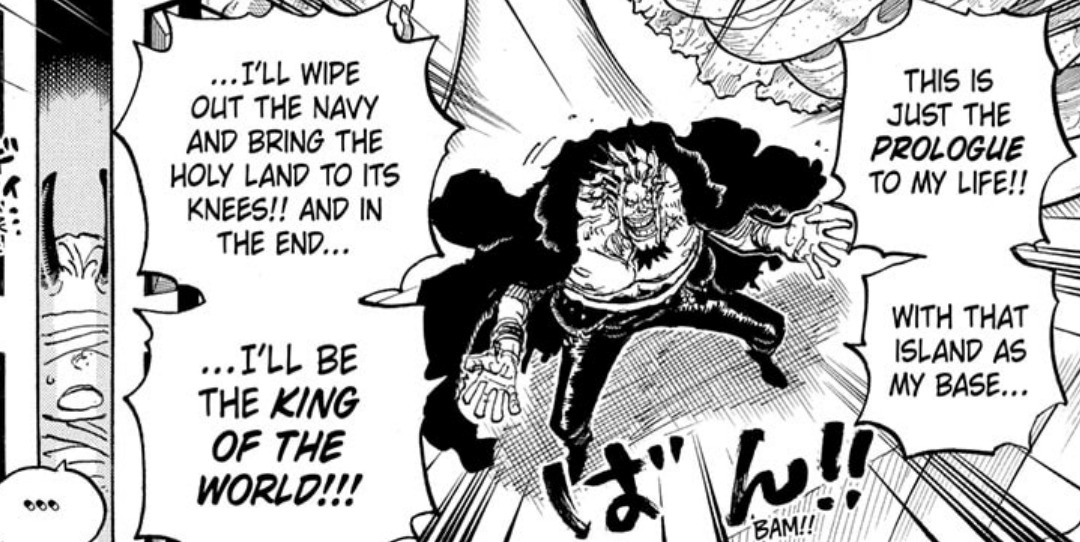
These declarations however impress a young Loki, who looks up to Xebec when his father didn’t. Unfortunately though, while Loki did request to join Xebec’s crew, he would be beaten up, having to abandon such a dream.
As we skip four years later, or in other words, the year 1480 44 years ago, we are at 6 years before the God Valley Incident, as Xebec sets his grand plan in motion, taking control of Hachinosu and finally establishing the Rocks Pirates. We’ll have to see though if we do continue seeing things from his perspective or if instead we’ll simply go back to Loki now that Xebec has refused to take him in. At the very least, if we don’t hear of God Valley again, we’ll see Loki’s reaction through the news, as he was aware of it.
The chapter closes with the editor note of “the legend sets sail!!”, which lines a lot with last chapter’s claim of “the legend appears!!”. This statement seems fairly reminiscent of the claim Oda made of the “lurking legend”, a figure which Oda described with three traits: 1) that the figure would appear or be mentioned in some form during the year of 2018 in the manga, 2) that the figure was somehow connected to Whitebeard, and 3) that the Straw Hats would one day face this figure as their strongest enemy yet. The only two candidates for this position of lurking legend would be either Rocks or Imu. The connection with Whitebeard seems to connect it to Xebec, but on the other hand the Straw Hats facing him seems odd as he should be dead. Unless Xebec comes back in some form or even perhaps if some part of him still exists to this day… as Marshall D. Teach, lurking as a legend in the shadows of this world.

 The Library of Ohara