
Video version: https://www.youtube.com/watch?v=Kh2arn24iLE
Covers

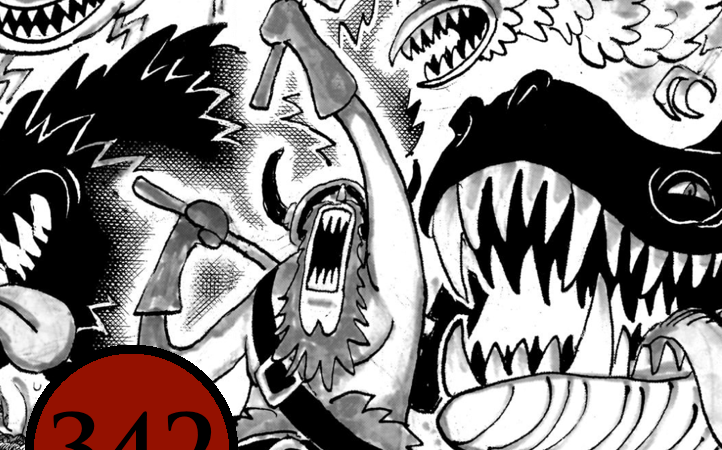
On the covers, Who’s Who is about to kill Page One, making Ulti both incredibly enraged and incredibly sorrowful. However, Yamato rushes in and delivers a Raimei Hakkei to Who’s-Who, the iconic attack inherited from Kaidou. As mentioned in the description, Who’s-Who is the one who both stole Yasuie’s sword and kidnapped all the girls, as well as likely Minatomo, and so Yamato can finally put an end to these issues. At the same time, saving Page One may convince him and Ulti to follow Yamato. After all, since Ulti and Page One are Kaidou’s adoptive children, whom he adopted after Hanafuda passed away, that makes them Yamato’s younger foster siblings, and so they may decide to put past grudges aside… hopefully.
Haugen
As Ripley continues touring Franky around the Adam Tree, she shows him a gigantic branch that has been cut off. According to her, this branch haused a village called “Haugen” (ハウゲン). One day, this village was struck by lightning, and since the fire it spread could not be stopped, the entire branch had to be cut off, village and all, to prevent the fire from spreading to the rest of the Adam Tree.
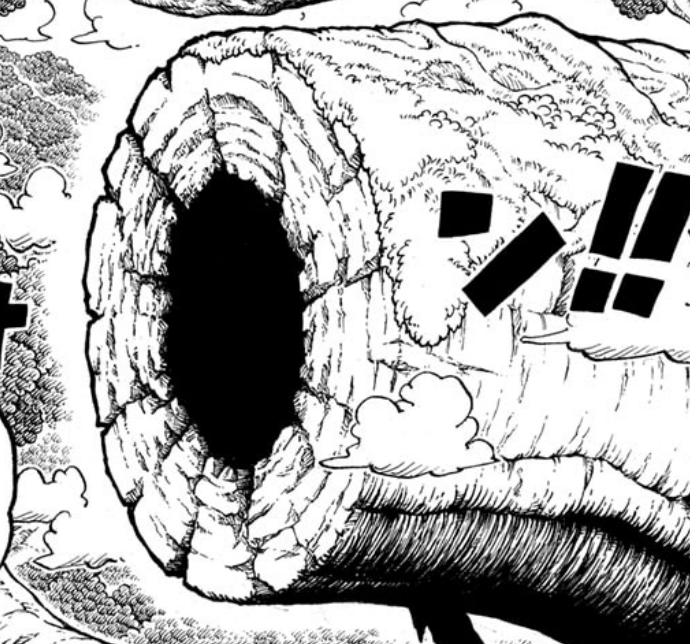
As such, Ripley mentions that fire and lightning might be the biggest weaknesses to the Adam Tree, something that does not bode well given Loki’s powers later on. By the way, “haugen” is a common suffix for location names in Norse. This is because it literally means “small hill”, so it’s included in the names of a lot of sites in Norway, such as Tinghaugen, Oseberghaugen, Gokstadhaugen, and so on.
I also wonder what could’ve happened to the rests of the Adam Tree that were cut off from the branch. Perhaps it’s possible that the little wood that survived the burning may have been stolen by the humans below and then resold into the black market, perhaps being how the likes of the Sunny were made.
Back at the West Village, Usopp is unusually drunk, to the poing he refers to characters as Luhi and Roro, as well as trying to pull out the sword out of Yarul’s head as if it was an excalibur, a myth that clearly has persisted across the ages in this world. Though this is seemingly due to Usopp’s joy of achieving his dream, he’s clearly had a bit too much. Brook is similarly drunk, with his laugh being “Yohohyahya” rather than the usual “yohohoho”. However this makes sense, because according to the SBS, while Jinbe, Zoro, and Nami are the strongest drinkers on the crew by far, the likes of Brook and Usopp are actually fairly lightweight drinkers.
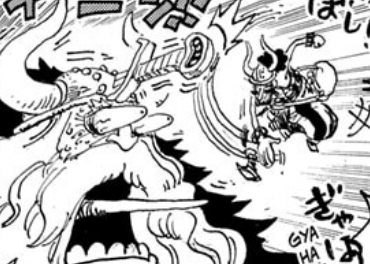
Meanwhile, Gerd treats the two injured gatekeepers, as after all, she is the doctor of the New Giant Warrior Pirates, as indicated by her luggage with a medical cross on it. Road however ends up spilling the beans about what he did, since he’s not very good at lying, but in this panel you can see the difference in their height, showing that even giants can vary quite a bit in height, just like humans.
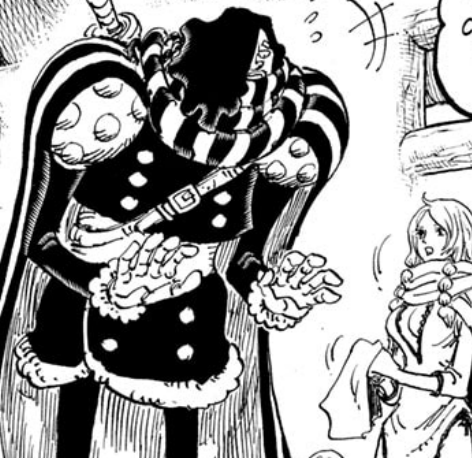
Road also mentions a more proper name for the castle he kept his Block Country in, calling it “Block Castle” (ブロックの城). It was originally a Penitentiary for Giants, but Road has now been using it ever since it was abandoned it and given it this name. This is fitting, because within the Block Country itself there is Bigstein Castle, whose name basically translates to “Big Blocks Castle”, so it may have been inspired by the very castle it’s in.
Loki Is Freed
Down at the Underworld, Zoro and Luffy try to free Loki, but are stopped as the New Giant Warrior Pirates (and Sanji with them if you notice) rush down to the Underworld with them on a svarr. However, since sea clouds and island clouds only work in the higher atmosphere of the sky, the ship ends up plummeting once it reaches the Underworld. During this scene we also get a nicer look at some of the weapons for the Giant Warrior Pirates we saw before: Hajrudin carries a double-sided axe, Stansen a large hammer, Goldberg a mace on top of his homie-like shield, and Gerd an axe, but while Road carries no weapons here, he was originally seen wielding a sword. Speaking of Goldberg’s shield though, you can see that it seemingly also reacts to the impact against the Gum-Gum Balloon. As the giants are about to bounce, Gerd falls off the ship, so Hajrudin tries to extend his hand to save her, while Sanji dives after her as well. Though her falling off fundamentally lessens her wounds.
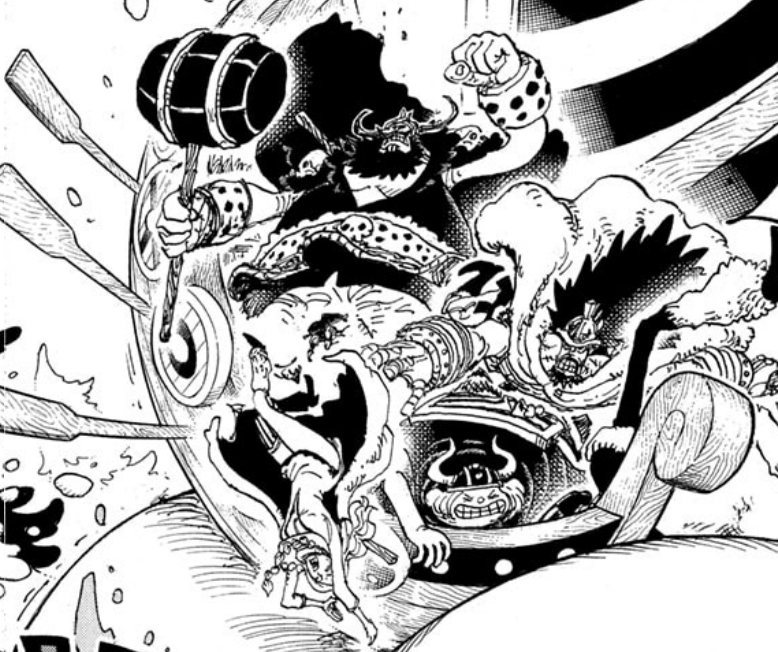
However, as Hajrduin tells Luffy not to free Loki, not only is Luffy sweating bullets, but he literally can’t even say a word, as his speech bubble is literally empty, even in Japanese, something that has rarely ever even happened across the entire series. However, it’s already too late, as Zoro has already freed Loki’s cuff, liberating him upon Elbaph. However, keep in mind, one of the seastone cuffs is still on his foot, so Loki will still be weakened, beyond his wounds as well, of course. Though in that case it seems he was exaggerating his wounds to trick the others into releasing him. So either this will serve to limit Loki for a bit or maybe he’ll be able to forcibly take the key from them to free himself further.
By the way, Zoro refers to Loki as “Oars-sized”, which refers to the fact that Loki seemingly has ancient giant blood flowing inside of him through his father Harald who was a hybrid, which would make him taller than the normal giant. Even so though, he doesn’t seem to be as big as the 60m+ tall ancient giants, but Zoro may generally be exaggerating here, with hybrids likely more in a halfway point between the giant 20m and the ancient giant 60m.
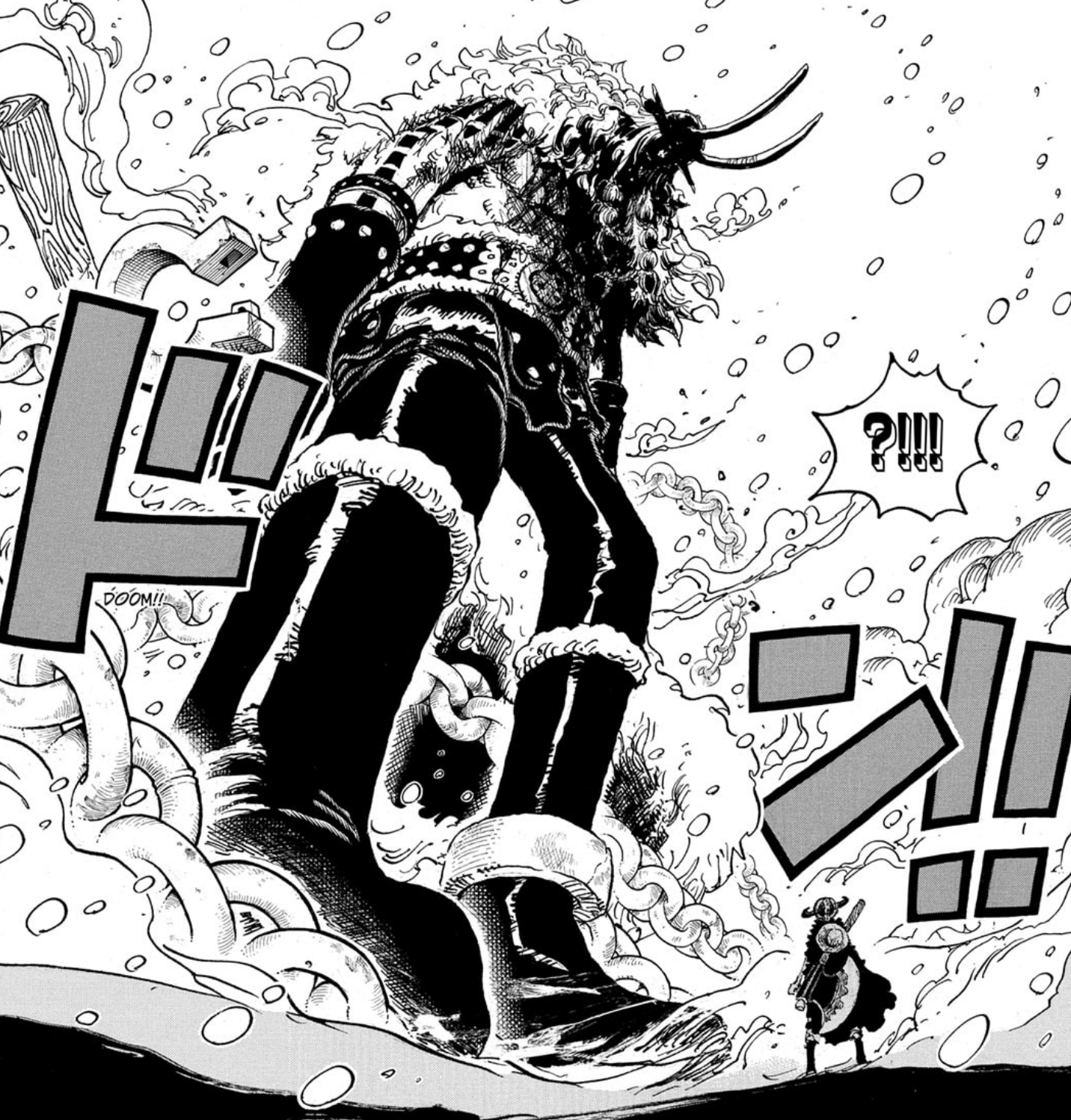
As Loki arises though, we finally get the name of his weapon, seemingly being the giant hammer that he had behind him when he was captive. The weapon’s name is “Ragnir”, and while it may not seem like it, this is an elaborate play on words, combining the words for “Ragnarök”, which refers to the end of the world in Norse mythology that Loki kept mentioning he’d bring, and “Mjölnir”, the iconic lightning hammer that Thor was said to wield. As such, Ragnir is the Mjölnir that will bring forth the Ragnarök. This is further reinforced by the fact that while “Ragnir” is the phonetic reading, the kanji reading combines the two kanji of “tetsu” and “kaminari”, which usually aren’t combined together as this is a made-up word, but it would theoretically be pronounced as “tetsurai” (鉄雷), essentially being a combination of “iron” and “lightning”. As such, it once again connects to the Mjölnir, the lightning hammer of Norse mythology with which Thor delivered powerful lightning strikes, as it’s believed the etimological root of Mjölnir could also be that of lightning.
Of course, the real frightening connection here is the fact that Ripley mentioned before how lightning and fire are the biggest dangers to the Adam Tree, and with someone who may have the power to deliver lightning and was also known to set whole villages on fire as pranks, declaring himself to be the Sun God, then the end of the world really might begin on this very island.
And indeed, that is exactly what Loki plans to do, threatening Hajrudin to remove his other cuff, though really only using this as a way to intimidate him into freeing him further. Although the size is clearly exaggerated here, Loki is clearly considerably taller than Hajrudin, due to his ancient giant blood clearly being more preserved, while Hajrudin’s instead is seemingly more dilluted, lending credence to Zoro’s “Oars-sized” claim.
And so, just as predicted, with the cracking sound effects of haki, Loki delivers a powerful haki-infused strike with his Ragnir, which invokes a powerful lightning blast that strikes the Adam Tree, setting it on fire on its upper southern side.
Monsters Descend
Meanwhile, at the Walrus school, a giant snake attacks the children. The children refer to this snake as the “Jörmungandr, the snake of world’s end” (終末の大蛇). As you may be aware, the Jörmungandr is a creature in Norse mythology, being a colossal serpent that envelops the whole world. Born as the child of Loki and the jötunn giant Angrboða, it was banished by Odin into the sea and grew to a colossal size to the point it could bite its own tail and encircle the entire world. However, it is said that on the day of Ragnarök, the Jörmungandr will let go of his tail and engage in a battle to the death against Thor.
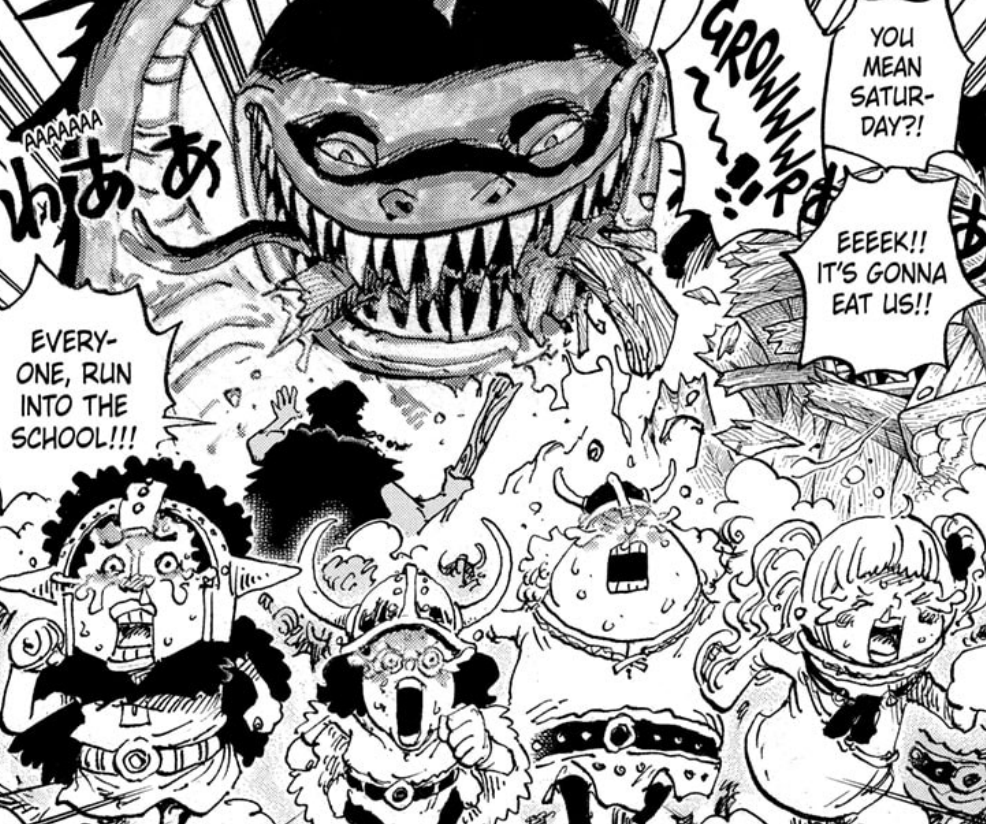
This serpent was already referenced by Dorry and Brogy as far back as Little Garden as they seemingly referred to the Red Line as the “serpent soaked in blood”, due to being like a giant snake that surrounds the world. However, at the same time, it seems there may be more to this claim, considering the Harley talks of the Hellflame Serpent and potentially attributes it to the Red Line given the mural, so the legend has persisted in the myths of Elbaph. In fact, the Jörmungandr letting go of its tail during the end of the world and eventually being slain could be a symbol of how in the end of the world for One Piece the Red Line will vanish as well.
There is something peculiar about this snake though, and it’s the fact that it looks as if it were drawn with ink, similar to Kanjuro’s drawings. Though as we’ll learn later, this is a hint to its true identity.
In this case though, as the children run away, one of them asks “On a Saturday?!”. This could potentially be a pun, as “world’s end”, or “shuumatsu” in Japanese (終末), is pronounced the same as “shuumatsu” (週末), or “weekend”, despite having different kanji. At the same time, this random comment could prove an incredible help to the One Piece Timeline itself, as if it really is Saturday, then this could be a point of reference for charting the days of the week in the One Piece storyline. We know Elbaph takes place around April 10th to the 15th of Year 1524 Kaienreki, but this is slightly vague due to the statement of “a few days passed” from Wano to Egghead and only having another point of reference to get a window of days, so if we can more carefully pinpoint on which day this is, then we could attribute a day of the week to the rest of the days on the timeline.
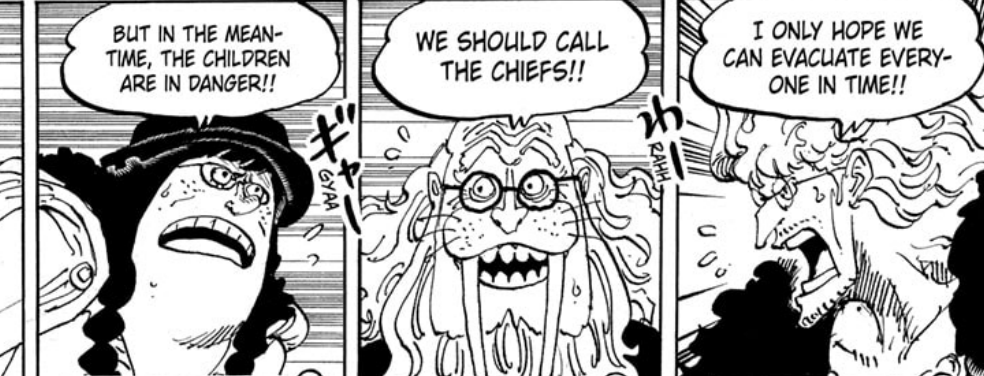
We switch to the Walrus School’s Faculty Room, a place that should be familiar to anyone who has been through education, as we are introduced to a bunch of the teachers. Of course we have Ange-sensei, who not only is a librarian at the Owl Library, but is also the Language Teacher. Then, there is Blade-sensei, or “bureido” in Japanese, who is the Mathematics Teacher. He has horns, indicating he has ancient giant lineage within him. Later in the chapter we’re also introduced to Wolf-sensei who is the Physical Education Teacher. Adding as well Ripley-sensei, who we know was the Biology Teacher, we finally have Kiba, who is the School Principal, as evident by the walrus-like appearance he has. In fact, “Kiba” means “fang”, or “tusk” in Japanese, so even his name is referring to his massive ivories.
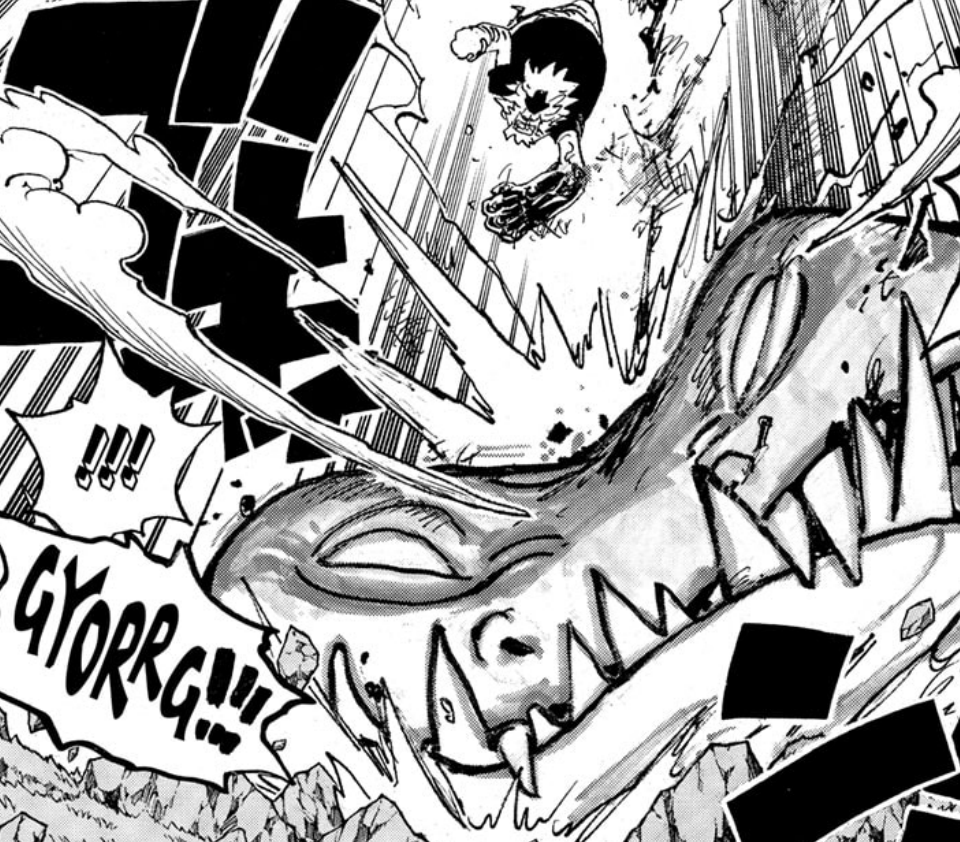
Kiba is no joke however, as he is able to heavily wound the Jörmungandr with his hammer, as we get the reveal that he was in fact a former member of the Giant Warrior Pirates. He is not the only one to fight back though, as Saul rushes in from the library from the branches above and coats his fist in armament haki, delivering an attack called “Kimatsu Shiken” (鬼抹 志拳). The kanji for this attack read as “Devil Crusher Ambition Fist”. This may seem like a fairly generic amount of words, but in reality it’s all a grander pun, because when written with different kanji, “Kimatsu Shiken” can literally just mean “Final Exams”, the two words you don’t want to hear your teacher saying! But well, keep in mind that Saul was a Marine Vice Admiral, someone who during the buster call single-handedly destroyed six Mairne warships, a crime that was later attributed to Robin, so he is absolutely no joke, even with his pegleg.
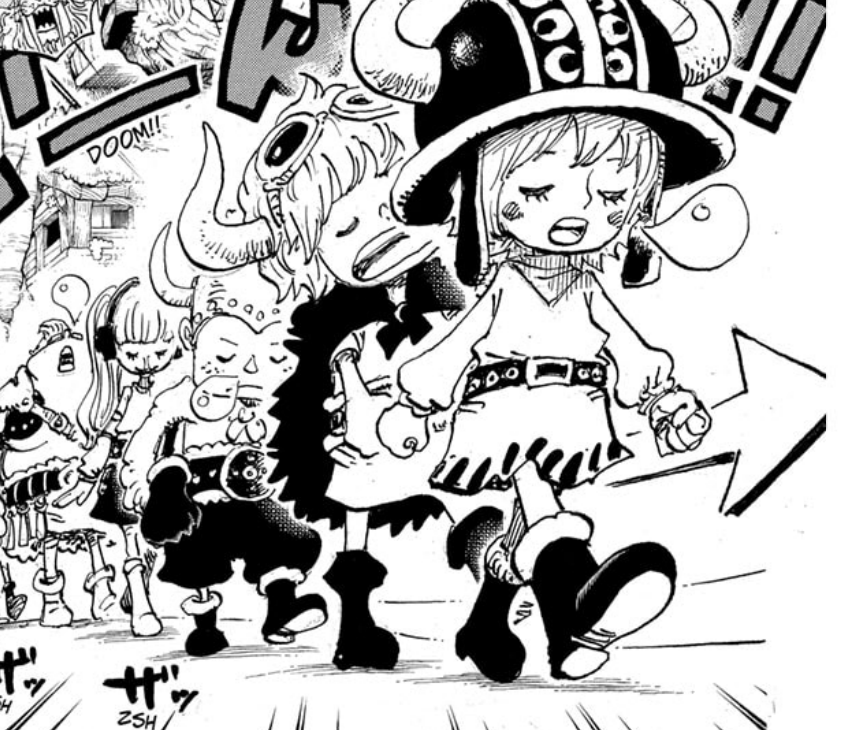
We also get the name for some of the giant children however. The one with the spikey hair that was scared by Luffy, and is subsequently spooked a bit by Robin just by being his crewmate, is called Ægir (エーギル). This name is derived from the jötunn giant of the same name in Norse mythology, who serves as a personification of the sea, and is in fact the father of several other important figures, including Gerðr, after which Gerd is named after. Another girl instead is called Ylva (イルヴァ), which is a common female Swedish name and also the name of the Vicky the Viking’s mother, a show that Oda has constantly cited as a major inspiration for Elbaph. By the way, one of the giant girls appears to have a hat with a sun symbol on it, similar to the symbol of the ancient kingdom.
Away from the school, Ylva and other children are being guided away from the school while sleeping. Though it’s not clear yet how they are sleeping, seemingly they are being moved by Gunko’s arrow, which essentially works like a vector pointing the children towards a direction. Furthermore, the children within the school collapse as well, though it’s unclear if they’ve all fallen asleep as well or straight up fainted.
And among all this, Ange realizes what is happening. Earlier in class, the children, some of which have horns due to possessing ancient giant blood, were discussing on what being is the scariest. One describes Loki with his hammer being the one who will destroy the world, whereas another describes Nika as being the one who will destroy the world. The rest of the children keep describing what it is that they consider to be the scariest. One of the girls mentions ghosts, and a ghostly flame appears in front of her, though likely as a representation.
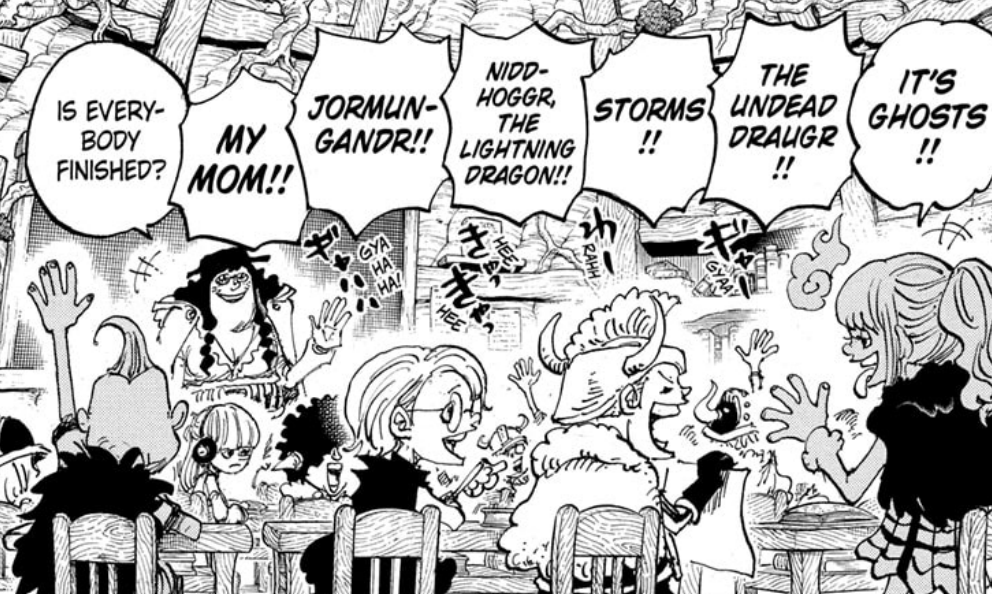
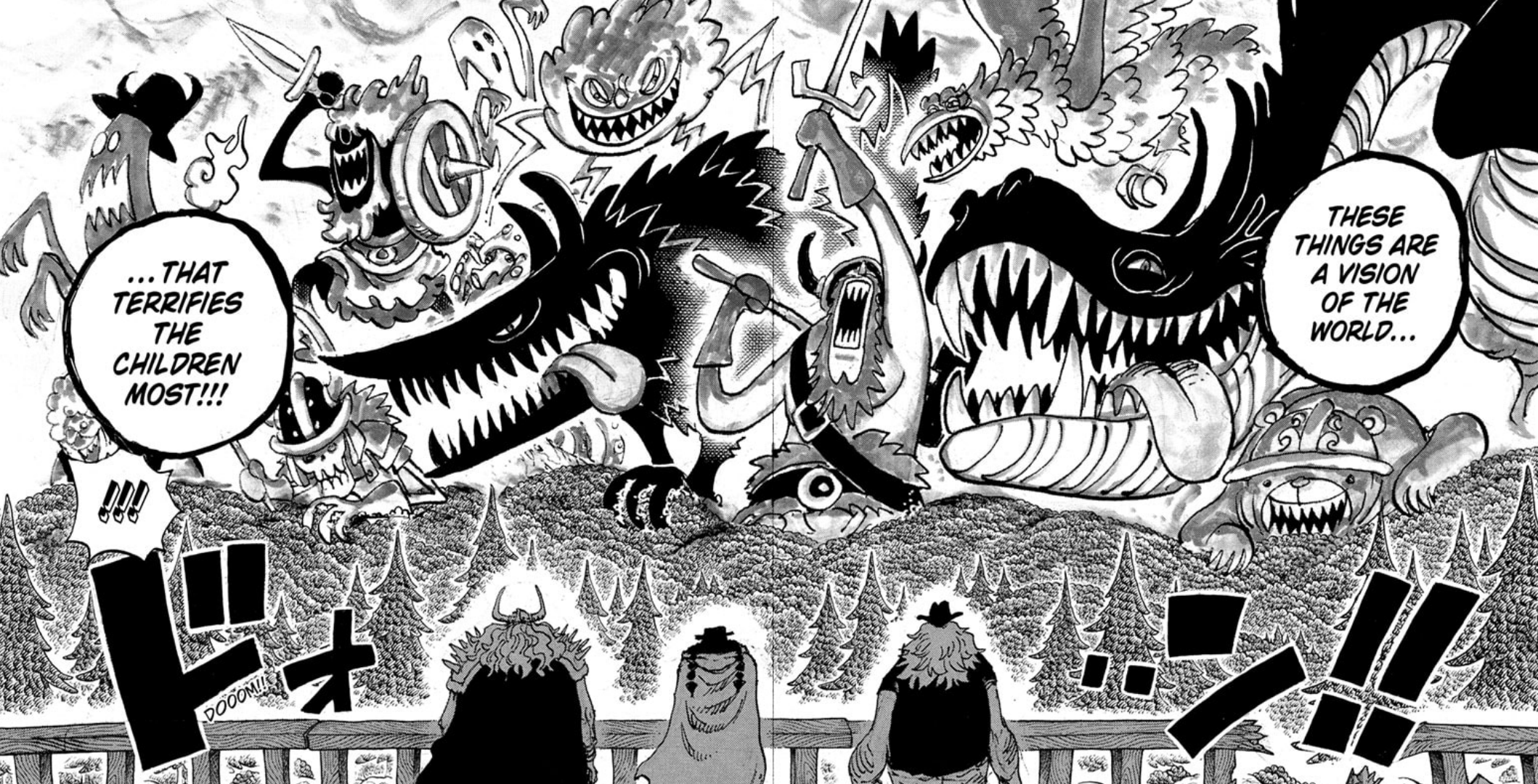
However, Ylva says that if they keep talking about this, then they’ll end up having nightmares of all these creatures today. And this is exactly what is happening right now. The kids’ very nightmares and their deepest fears are manifesting into reality and materializing, looking exactly like their inked drawings.
And so, a swarm of nightmarish creatures emerge from the forest. Just as it was foretold, Loki setting up the destruction of the world and the appearance of all these monsters marks the beginning of Ragnarök, the end of the world. Principal Kiba realizing this very situation, asks for Blade to “sound the horn”. But this is no ordinary horn, this is the Gjallarhorn, the horn that according to Norse mythology indicates the beginning of Ragnarök. The end of the world begins right now.
Ragnarök Begins
Now, I’m going to simplify things here a bit as there’s a lot of vagueness in the old descriptions of the Edda and other works, but In Norse mythology, Ragnarök is foretold as being a cataclismic event to happen in the future, much like how the writers of the Harley foretold the cataclysm of the Third World’s end. Its etymology is believed to be the “Twilight of the Gods”, where the Gods of this world go to battle in a grand destructive event. One of its key triggers would be Loki, who finally unchained and unbound kickstarts Ragnarökr. Several great beasts, like the Fenrir or Jörmungandr will break free, unleashing chaos upon the world. The Gods will be warned with the calling of the Gjallahorn, the horn of the God Heimdallr that marks the beginning of the end.
This results in the entirety of the World Tree being consumed by flames as it is set alight by the fire jötunn giant Surtr, and fanned by the likes of the Fenrir, but ultimately Ragnarök ends with the entire world being flooded in water… just as foretold being the final stage being set by Imu. In spite of that, Ragnarök isn’t really meant to be the end. If anything, it’s meant to mark a new beginning, and show a cycle of regeneration as the world of old goes, and both beasts like the Jörmungandr and the Gods disappear, leaving space for mankind to be in control of their lives. So in much the same way, this end of the world may ultimately lead to a new Dawn, one where the Gods that are the Celestial Dragons are killed and men regain control of their freedom. But to get there it means surviving a truly apocalyptical scenario.
And heralding that is not just the sound of a horn, but the sign that all the creatures of Ragnarök are appearing. The Jörmungandr, having let go of its tail, was but the first of many more to come.
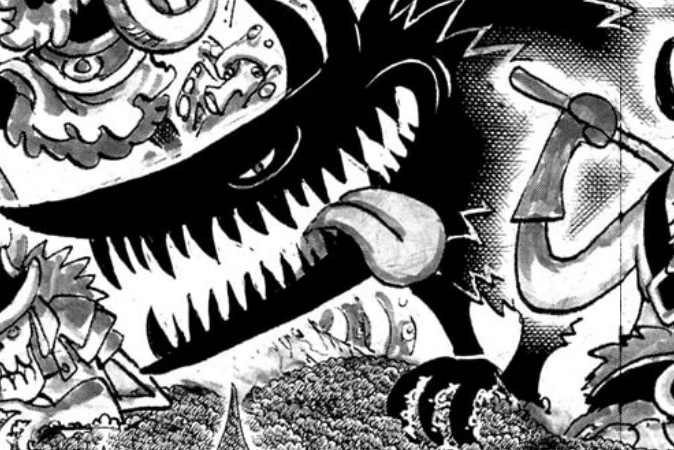
First, as mentioned by one of the children, is the Fenrir. The Fenrir, which here is written with the kanji for “giant wolf” (巨狼, kyorou), refers to the appropriately named gigantic wolf, who is one of Loki’s children just like the Jörmungandr. It played a key role in Ragnarök, helping spread the flames that set the Yggdrasil tree ablaze, and so here it will only aggravate the flames generated by Loki as they burn the Adam Tree. It is also foretold that Fenrir will be the one to kill Odin, so Hajrudin, who is named not only after the Turkish pirate of the same name but likely here also referencing Odin himself given his dynamic with Loki, should definitely watch his back.
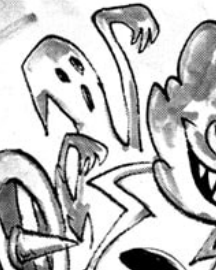
Then is the fear of ghosts (お化け) a belief that trascends cultures and applies to any mythology, with these ghastly beings coming to haunt us from beyond the grave. However, these creatures are definitely present in Norse mythology as well, with plenty of ghouls and spirits in their mythology.
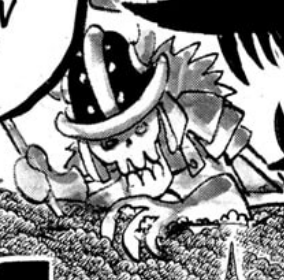
Beyond them though is the Draugr (pronounced “drau-gr”), the undead monsters of Norse folklore. Written here with the kanji for fire, death, and person, (火死人) fundamentally meaning “people that died in fires”, the Draugr are revnants, undead corpses that are brought back to life as reanimated corpses. Essentially the bodies of old warriors who have become skeletons and yet their skeletal bodies move once again to haunt those who yet live.
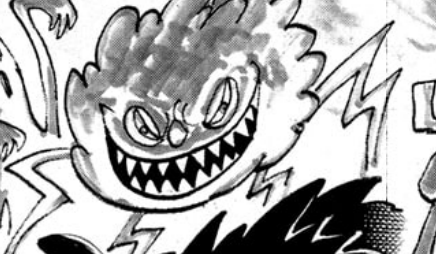
Then there is the fear of storms (嵐), manifested in the form of a cloud that brings down lightning, a fear that those who are afraid of the natural born disaster that is Big Mom should all be familiar with. This being however brings particular danger, as its able to unleash lightning, capable of setting the Adam Tree ablaze.
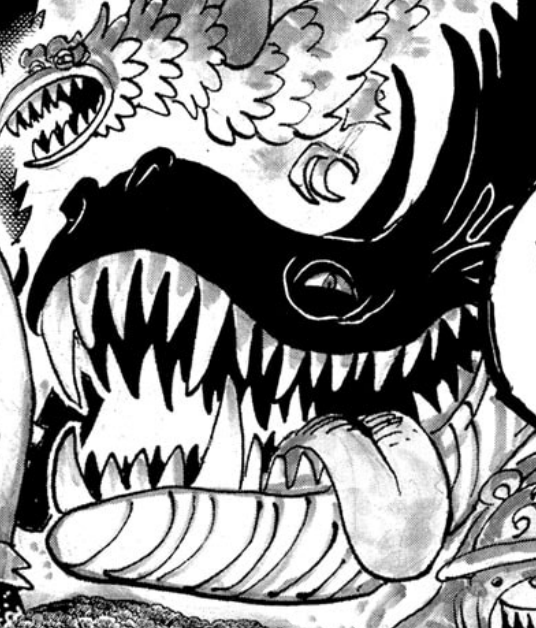
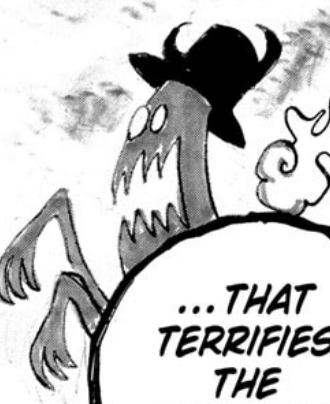
Yet perhaps even more fearsome is the “Níðhöggr” (pronounced “nig-hog-r”). Written with the kanji for the “thunder dragon” (雷竜, rairyuu), the Níðhöggr is a wyrm, or dragon, that is said to be trapped under the roots of the Yggdrasil, gnawing at them as it wishes to be released, being placed right under where the corpses of the wicked rest. When the Yggdrasil begins to burn during Ragnarök, the Níðhöggr is unleashed upon the world, carrying the coprses of the dead above its wings. In this case here it is depicted as a dragon with dark skin, quite similar to Vegapunk’s artificial Dragon Number Thirteen from Punk Hazard. But even more striking of a resemblance is the fact that this dragon heavily resembles the one drawn on the Harley mural, even possessing the same horns. As such, in the same way that the myth of the Jörmungandr arose from the Hellflame Serpent that became the Red Line, the myth of the Níðhöggr must have arose from whatever role this dragon had during the Second World where it is depicted, perhaps relating to the “Celestial Dragon” that has been alluded as the namesake of the Tenryuubito duirng the Void Century.
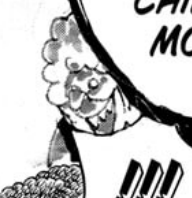
But finally, there is the most fearsome of all beasts… the mom (母ちゃん). Known for her terrifying short temper and her commanding orders, her fearsome weapon, “la chancla”, strikes fear in the hearts of men. And in fact you can see the beast known as the mom here as well, hiding right under the ghost, ready to tell some poor giant to go eat his veggies. There’s also the possibility that this maybe embodies the fear of Big Mom, in the tales that the giants have passed on, but frankly I find the idea of this just being some kid’s mom much more amusing.
There are other beasts however that are not directly named by the children:
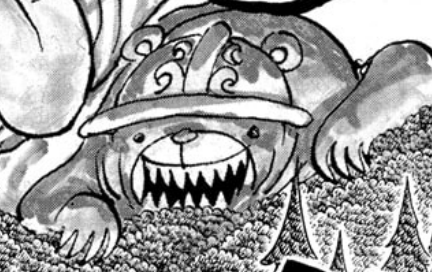
The bear, what the vikings called the “bjorn”, a fearsome creature that is not mythical, but very real, being large imposing beasts that will kill any unfortunate enough to come across them. There is however a fictional version of this creature, which would be the berserker, from which the current word “Berserk” comes from, referring to warriors clad in bear skin and helmets that would follow Odin into battle.
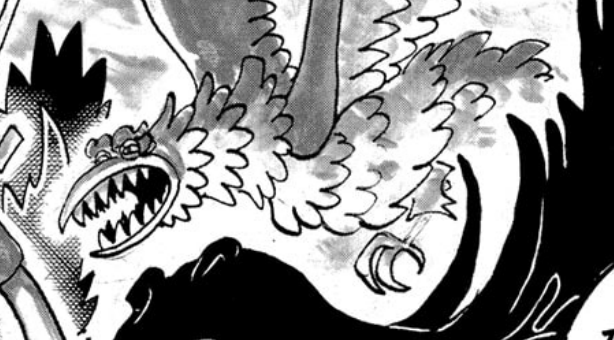
There is also a large bird, what may be the Víðópnir (pronounced as vee-dop-nir), a large majestic bird said to inhabit the top of the Yggdrasil where it roosts, though it is said to share that place by roosting atop another large bird, the eagle-like Hræsvelgr (pronounced as hres-vel-gr) which could potentially be the inspiration here as well.
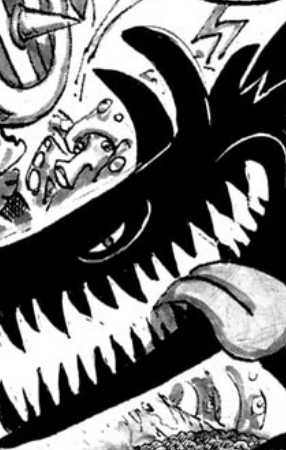
And of course there is what is most likely the Kraken, a colossal squid that would assault and devour sailors and entire ships unfortunate enough to cross its path. Despite what some may think, the Kraken is in fact a mythical Norse figure, though generally adopted later compared to older myths.
But beyond them we have the two core figures that were mentioned from the start:
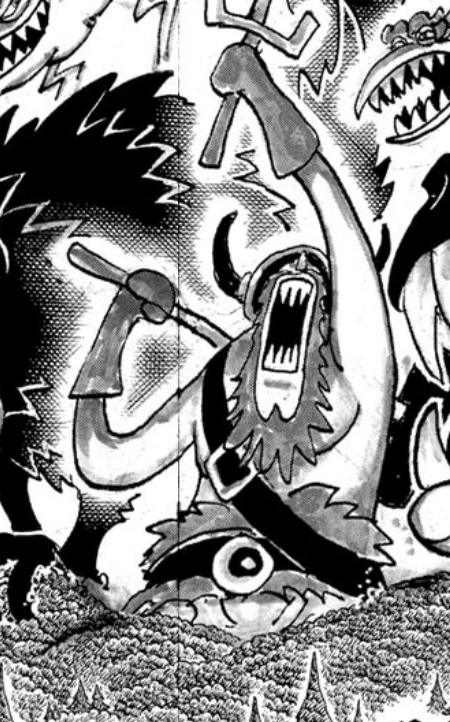
There is the figure of Loki, a warrior carrying his hammer into battle as he brings the end of the world. In Norse mythology, Loki is a trickster god who is chained and imprisoned after causing the death of another beloved god, Baldr. a name that when written in Japanese, “barudoru”, is fairly similar to “hararudo”, or “Harald”. However, when he finally breaks free, he leads a war against the gods living above as he serves as one of the triggers for Ragnarök, the end of the world. A fearsome destiny that this Loki seems to carry as well.
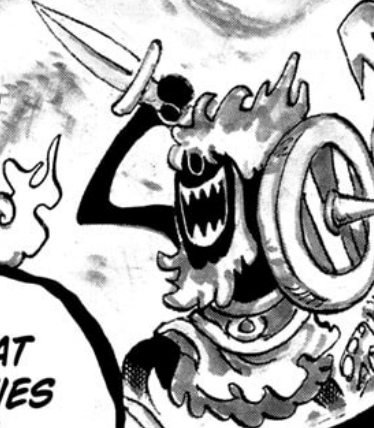
Yet on the other hand is the other destroyer of the world, the Sun God Nika. Only that in this form, it is depicted as an evil god that only wishes to bring the world to its destruction, armed with a sword and shield, but with an evil grin on his face, and a beard uniquely enough.
However, we see the origin of all these beasts. The one to responsible seems to have been Kiringham, particularly as he claims “Preparations are done.” and Sommers tells him “Good job, Kiringham.” (particularly using the Japanese expression “otsukare-san”, which means “good job”). This was likely what Shamrock was referring to, Kiringham and Gunko’s powers, while he himself is seemingly really gone, back to Mary Geoise.
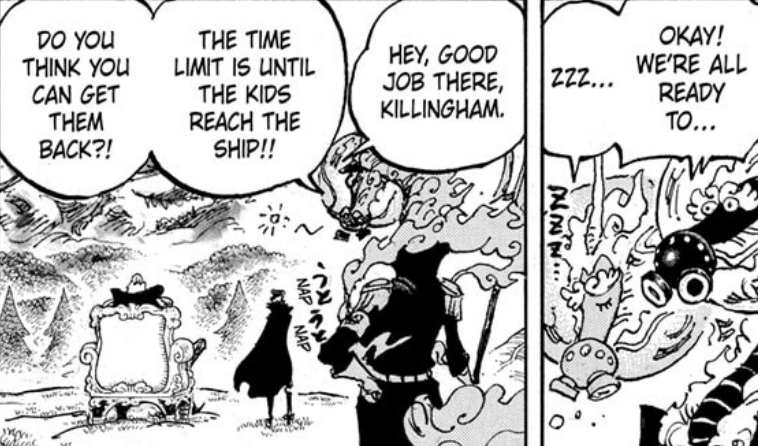
However, how exactly did Kiringham pull this off? After all, the mythical beast of the Kirin isn’t really known to have powers relating to sleep. It’s clearly been set up by the fact he seems to constantly fall asleep pretty easily, maybe as a side effect of his powers, but I wonder just how exactly it ties with his abilities as a kirin. The best I could find is the fact that the kirin appearing in your dreams is meant as a good omen, so maybe that’s how it connects to him having the power to make others fall asleep while Sommers instead is the one with the ability to make nightmares come to life, so he’s thanking him for putting the children to sleep.
In spite of all this, however, Sommers poses a question for Gunko, which is what is the thing that she fears the most. And oddly enough Gunko cites… Nika. What past does she hold with Nika that terrifies her so much? Is it just because she’s a Celestial Dragon (even if that hasn’t been fully clarified entirely) or is it because of some more personal history? And how will she react once she sees Luffy transformed as Nika in action, the embodiment of her biggest fear?
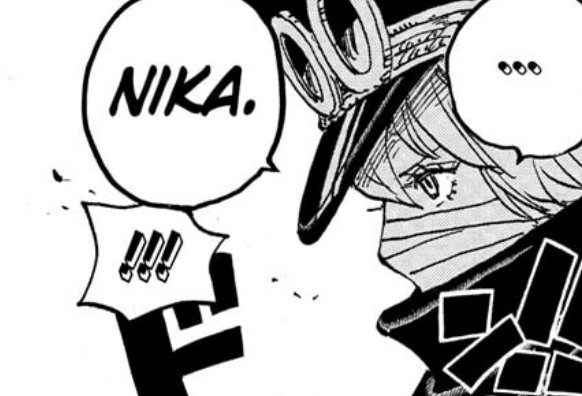
Well, let me pivot that off with another question: what is it that scares you the most? Because I know what is most terrifying of all… that text which reads “break next week”!
 The Library of Ohara